
Asia-Pacific markets commenced the first complete trading week of 2026 with a positive momentum following the announcement from the U.S. regarding its military action in Venezuela, which resulted in the capture of President Nicolas Maduro over the weekend. Oil prices experienced a slight decline as market participants assessed the possible ramifications of geopolitical tensions. U.S. authorities reported that Maduro and his spouse, Cilia Flores, were transported to New York subsequent to the operation and faced charges related to narco-terrorism conspiracy among other offenses. An indictment stated that drug trafficking had “enriched and entrenched Venezuela’s political and military elite.” Oil prices declined following the recent escalation concerning the oil-rich nation. Brent crude futures experienced a decline of over 1% earlier in the session before recovering some of those losses, currently trading 0.3% lower at $60.57. Meanwhile, West Texas Intermediate crude prices decreased by 0.4%, settling at $57.09 per barrel. Venezuela, recognized as a founding member of OPEC, possesses the largest proven crude oil reserves globally, totaling 303 billion barrels, which accounts for approximately 17% of the worldwide total, as reported by the U.S. Energy Information Administration. Spot gold prices increased by over 2%, reaching $4,427.09.
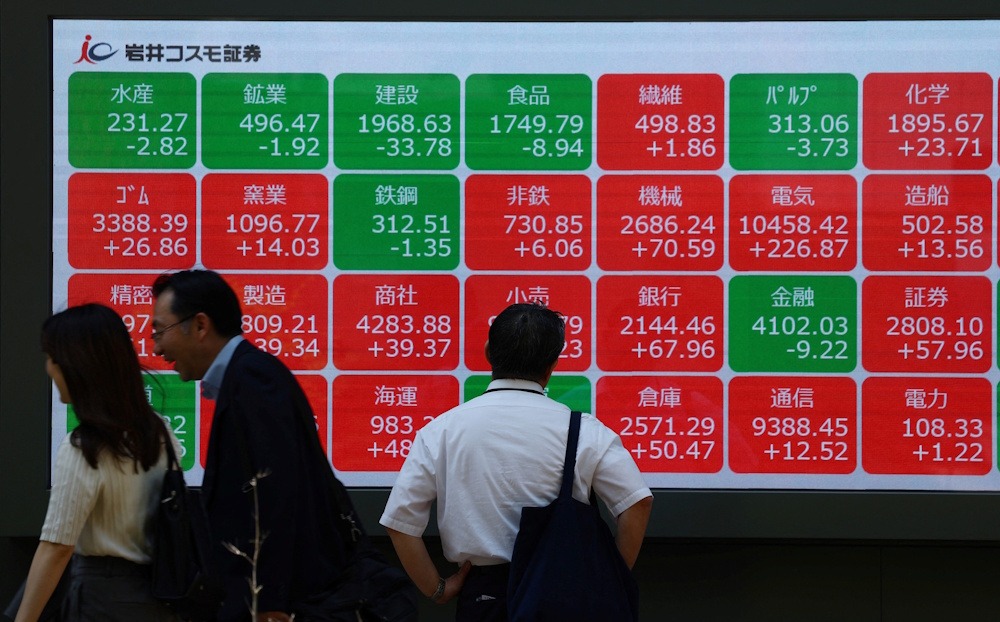
Japan’s benchmark Nikkei 225 index experienced a notable increase of 2.97%, closing at 51,832.8 during its inaugural trading session of the year. Meanwhile, the Topix index rose by 2.01% to reach 3,477.52, following its achievement of a record high. Defense stocks emerged as leading performers on the index, with IHI Corp experiencing a notable increase of 8.99%, while Mitsubishi Heavy Industries and Kawasaki Heavy Industries recorded gains of 8.39% and 7.9%, respectively. South Korea’s Kospi index continued its upward trajectory, increasing by 3.43% to achieve a record closing level of 4,457.52, following the establishment of new all-time highs on two occasions during the session. The small-cap Kosdaq experienced an increase of 1.26%, reaching a level of 957.5. Samsung Electronics, a significant player in the index, experienced a rise of over 7% following remarks from co-CEO TM Roh to Reuters on Monday, indicating the company’s intention to double the number of its mobile devices equipped with AI features driven by Google’s Gemini this year.
Shares of South Korean defense giant Hanwha Aerospace experienced an increase of nearly 7%, while Poongsan, a manufacturer of defense-related products, saw a rise of 2.25%. Australia’s ASX/S&P 200 concluded the trading session unchanged at 8,728.6. Hong Kong’s Hang Seng Index edged marginally higher to 26,347.24, as energy stocks exerted the most significant downward pressure on the index, whereas the mainland CSI 300 increased by 1.9% to 4,717.75. PetroChina, the largest energy company in China, experienced a significant decline, falling 3.52% on the Hong Kong index. CNOOC, the largest producer of offshore crude oil and natural gas in China, experienced a decline of 3.29%. India’s Nifty 50 experienced a decline of 0.17%, while the BSE Sensex index recorded a decrease of 0.21%.
U.S. equity futures exhibited stability during the early hours of trading in Asia. On Friday stateside, the first trading day of 2026, the S&P 500 closed slightly higher as gains in semiconductor names supported the index. The benchmark concluded the trading session with a gain of 0.19%, settling at 6,858.47, whereas the Nasdaq Composite experienced a slight decline of 0.03%, ending at 23,235.63. The two had been solidly positive earlier in the day, with the S&P 500 and the tech-heavy Nasdaq trading higher by 0.7% and 1.5% at their peaks, respectively. The Dow Jones Industrial Average increased by 319.10 points, representing a rise of 0.66%, concluding at 48,382.39.