
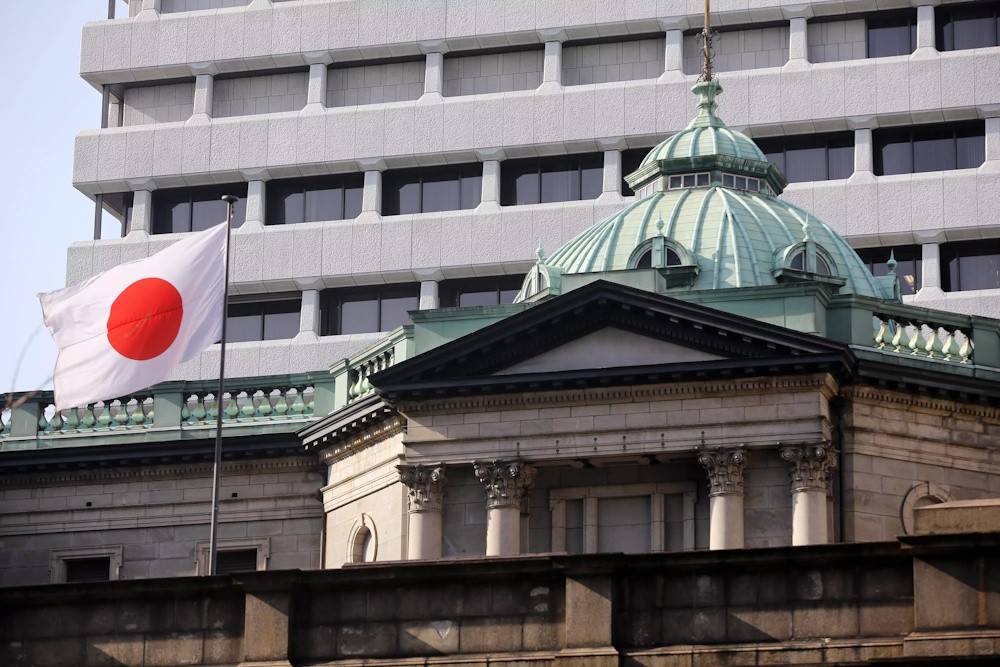
Asia-Pacific markets experienced an uptick on Friday, following the upward trajectory of US Market, as geopolitical tensions subsided and investors evaluated the Bank of Japan’s choice to maintain its interest rates at current levels. Japan’s central bank maintained its key policy rate at 0.75% as the nation approaches an election in which Prime Minister Sanae Takaichi, a proponent of monetary easing and fiscal support, will confront voters for the first time. Takaichi on Friday announced the dissolution of Japan’s Lower House, paving the way for a snap election scheduled for February 8. Japan’s 40-year government bond yield decreased by more than 4 basis points, settling at 3.953% following its peak on Tuesday. In the interim, yields on shorter maturities experienced an upward trajectory. The 10-year Japan government bond yield increased by approximately 2 basis points to 2.259%, while yields on the 20-year tenor edged up by less than a basis point to about 3.204%.
Bank of Japan Governor Kazuo Ueda stated that it remains premature to completely evaluate the effects of previous interest-rate increases, emphasizing that financial conditions in Japan continue to be accommodative despite the policy adjustment, as reported. During a post-meeting news conference, Ueda noted that the demand for funds among companies is experiencing moderate growth, while banks continue to be proactive in their lending activities. He stated that the central bank requires additional time to assess the impact of December’s rate increase on the economy and will maintain a close examination of ongoing developments. The yen depreciated to 159 against the dollar before rebounding to 157.3 in a matter of minutes, according to data. HSBC anticipates that the Bank of Japan will implement its next 25 basis point increase in July 2026. However, it cautions that additional depreciation of the yen could accelerate this timeline and potentially lead to further rate hikes.
The bank identified April as a potential alternative, referencing the publication of the BOJ’s quarterly Outlook report and enhanced clarity regarding this year’s Shunto wage negotiations, with an additional 25 basis points increase possibly occurring later in 2026. In December, Japan experienced a significant deceleration in its headline inflation rate, which fell to 2.1%, marking the lowest point since March 2022. The core inflation rate registered at 2.4% year-over-year, aligning with analysts’ projections. Japan’s Nikkei 225 closed 0.29% higher at 53,846.87, while the Topix increased by 0.37% to 3,629.7. South Korea’s Kospi increased by 0.76%, reaching 4,990.07, whereas the small-cap Kosdaq experienced a rise of 2.43%, climbing to 993.93. Several technology stocks in Asia experienced declines following a 13% drop in shares of California-based Intel during after-hours trading in the U.S., attributed to its weak guidance for the upcoming quarter, even though it reported a fourth-quarter earnings beat on Thursday. SoftBank Group experienced a decline of more than 4%, whereas Lasertec saw a drop of nearly 6%. Tokyo Electron experienced a decline of more than 1%. SK Hynix of South Korea experienced a decline of 1%.
The Hong Kong Hang Seng Index experienced an increase of 0.41%, whereas the CSI 300 declined by 0.45%, settling at 4,702.50. Australia’s benchmark index experienced a modest increase of 0.13%, reaching a level of 8,860.1. Overnight in the U.S., the primary benchmarks continued to build on their gains from the prior session following a reduction in tensions surrounding Greenland. The Dow Jones Industrial Average increased by 306.78 points, representing a rise of 0.63%, concluding the session at 49,384.01. The 30-stock index rebounded from the declines observed earlier this week in the wake of President Donald Trump’s announcement regarding new tariffs on Europe. The S&P 500 experienced an increase of 0.55%, concluding the session at 6,913.35. The Nasdaq Composite increased by 0.91%, closing at 23,436.02, buoyed by the performance of Nvidia, Microsoft, and Meta Platforms.