
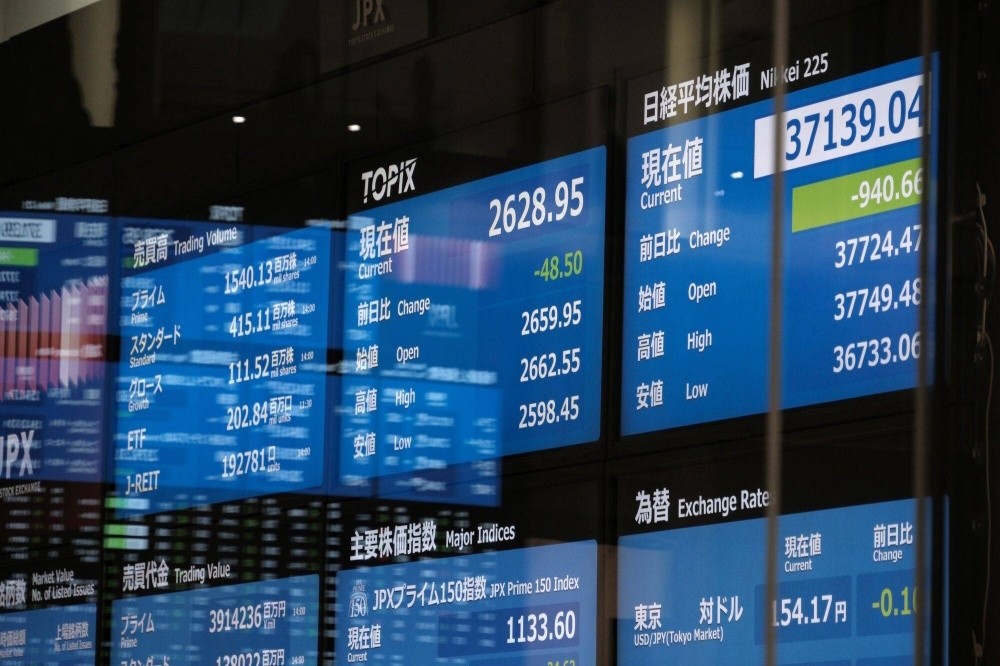
Japan’s Nikkei share average declined nearly 4 per cent on Tuesday to its lowest close in over two months, as chip-related stocks mirrored the downward trend of their US counterparts in anticipation of significant tech earnings. The Nikkei declined by 3.95 per cent, closing at 62,364.92, marking its lowest level since May 21. Meanwhile, the broader Topix experienced a decrease of 2.52 per cent, finishing at 3,963.59. “The Nikkei fell because AI-related stocks were heavily sold off, but this has nothing to do with the fundamentals of Japan’s economic outlook,” said Koji Toda. “Once investors see a firm outlook of big technology firms in Japan and the United States later this week, they would buy back stocks.”
Overnight, Nvidia experienced a decline of 4.9 percent, while the Philadelphia semiconductor index continued its recent downward trend, decreasing by 2.2 percent. The index has declined by 21 per cent from its peak closing value on June 22, yet it has experienced an increase of 63 per cent in 2026. South Korea’s benchmark KOSPI experienced a decline exceeding 10 percent on Tuesday. The Nikkei’s movements have been significantly shaped by the tech-centric Kospi and the US Philadelphia semiconductor index. Memory chip manufacturer Kioxia experienced a decline of 18.33 percent, reaching a daily limit low of 44,550.
Advantest and Tokyo Electron, both associated with the semiconductor sector, experienced declines exceeding 10 percent each. The Nikkei has experienced a decline exceeding 14 percent since reaching a record high in mid-June, driven by apprehensions regarding the substantial AI investments made by global technology companies, which have adversely affected local chip-related stocks. Investors had been reallocating capital towards value stocks, particularly in the banking sector, which had been appreciating due to expectations surrounding an imminent interest rate increase by the Bank of Japan.
On Tuesday, bank shares experienced a decline, with Mitsubishi UFJ Financial Group and Sumitomo Mitsui Financial Group each dropping more than 3 percent. Retailers experienced an uptick, as Pan Pacific International Holdings and Seven & i Holdings both increased by over 3 percent. Game maker Nintendo experienced an increase of 3.07 percent. Of the more than 1,500 stocks trading on the Tokyo Stock Exchange’s prime market, 30 per cent experienced an increase, 67 per cent saw a decline, and 1 per cent remained unchanged.
