
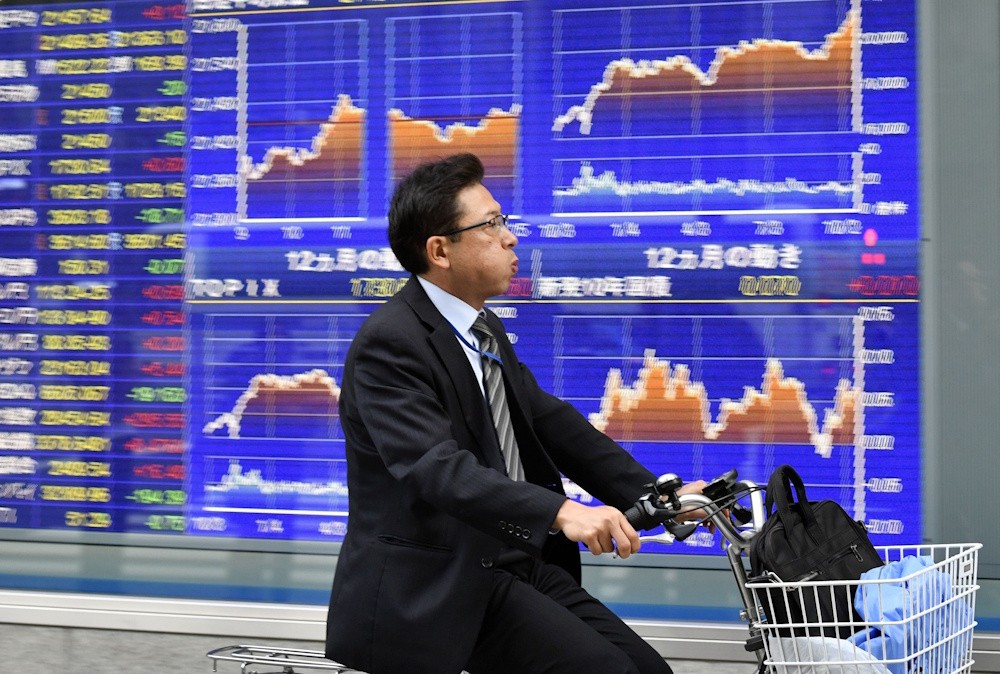
Global bond yields remained close to their highest levels in decades on Wednesday, as concerns regarding increasing sovereign debt elevated borrowing costs and unsettled stock markets across the globe. U.S. and European stock futures experienced a slight decline of approximately 0.2% during the Asia session. Japan’s Nikkei experienced a decline of 3.3%, while South Korea’s KOSPI saw a nearly 6% drop, as the sell-off in semiconductor stocks extended from Wall Street. The yield on the U.S. long bond stabilised at approximately 5.27% following its peak of 5.3371% on Tuesday, marking the highest level in nearly two decades. German and French debt futures remained stable following a selloff that propelled German 10-year and 30-year yields to their highest levels since 2011, while French 30-year yields have increased by nearly 50 basis points since June.
Yields increase as bond prices decrease, and the selloff is significant because long-end sovereign yields serve as a benchmark for the valuation of nearly all other assets in financial markets, as well as being a crucial reference point for mortgage rates. “Whether it’s property or equities or infrastructure, if you get a meaningful (bond) sell-off, then possibly that becomes a bit challenging for some of those asset classes,” said Sally Auld. The ascent of Japan’s benchmark 10-year sovereign yield toward 3% serves as a cautionary indicator for global debt markets, which have long relied on persistently low Japanese rates to facilitate a steady stream of Japanese investment overseas.
The inflation outlook remains concerning, as Brent crude futures are positioned above $90 a barrel, with no indications of advancement toward a resolution regarding the Strait of Hormuz. Debt demand is being significantly influenced by the soaring sales generated by AI hyperscalers. Alphabet, Google’s parent, is the latest example, reportedly seeking about A$5 billion through an Australian-dollar bond sale, source reported. Later on Wednesday, the U.S. Federal Reserve will release the minutes from the July meeting, during which it opted to maintain interest rates. However, Chair Kevin Warsh unsettled markets by providing scant indications regarding the central bank’s potential response to ongoing inflationary pressures.
The U.S. is also set to sell $16 billion in 20-year debt. Investors are increasingly sceptical about the prospect of government spending being brought under control. Indeed, they are pricing the risk that it does not’, stated Nigel Green, CEO of financial advisory deVere Group. Governments are confronted with a genuine decision regarding the balance between fiscal discipline and significantly increased borrowing costs, and market forces will continue to evaluate their choice.
