
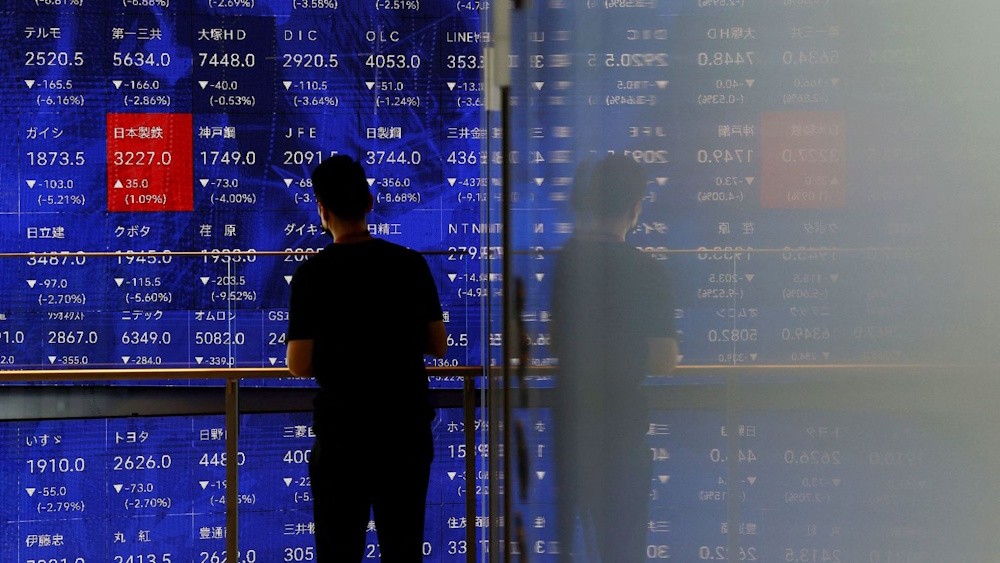
Japan’s Nikkei share average experienced a significant decline on Thursday, primarily influenced by a pronounced selloff in AI and semiconductor stocks, despite the fact that the majority of stocks within the index posted gains. A Democratic sweep in US midterm elections served as the catalyst for the tech rout, driven by expectations that Democrats will decelerate the pace of AI data centre expansion. Other sectors experienced gains, including real estate and retail, as investors adjusted their positions. Toyota Motor emerged as a notable victor, experiencing a remarkable increase of 16.7% following an upward revision of its profit forecast.
“Funds that had previously been flowing into AI and semiconductors have shifted to other sectors,” said Wataru Akiyama. “There is now a growing view that the Democrats’ gains will lead to delays in data-centre plans, (meaning) the current pace of earnings growth may not be sustained.” However, “given the strategic competition between the US and China, it is unlikely that the trend in data-centre construction will be reversed,” he said. The tech-heavy Nikkei concluded the trading session with a decline of 1.8%, primarily influenced by significant downturns in chip equipment companies Advantest and Tokyo Electron, which experienced drops of 14.7% and 9.4%, respectively.
Among the 225 components of the Nikkei, 161 experienced an increase while 64 saw a decline. The broader Topix index experienced an increase of 1.2%, with 25 out of its 33 industry groupings showing positive movement. Notably, transport equipment surged by 11.8%, while real estate saw a rise of 7.2%. Fast Retailing, the operator of Uniqlo, experienced a 4.7% increase, contributing to a 5.1% rise in the retail sector. The broad market experienced an uplift due to declining crude oil prices following remarks from US President Donald Trump.
He indicated that voter dissatisfaction with the Iran war had played a role in the Republican party’s losses, which in turn heightened expectations for a swifter resolution to the conflict. Resource-scarce Japan relies heavily on imports to satisfy nearly all of its energy requirements, predominantly sourcing from the Middle East. Shipping experienced a notable decline of 6.9%, reflecting concerns over potential reductions in freight rates should the situation in the Middle East stabilise.
