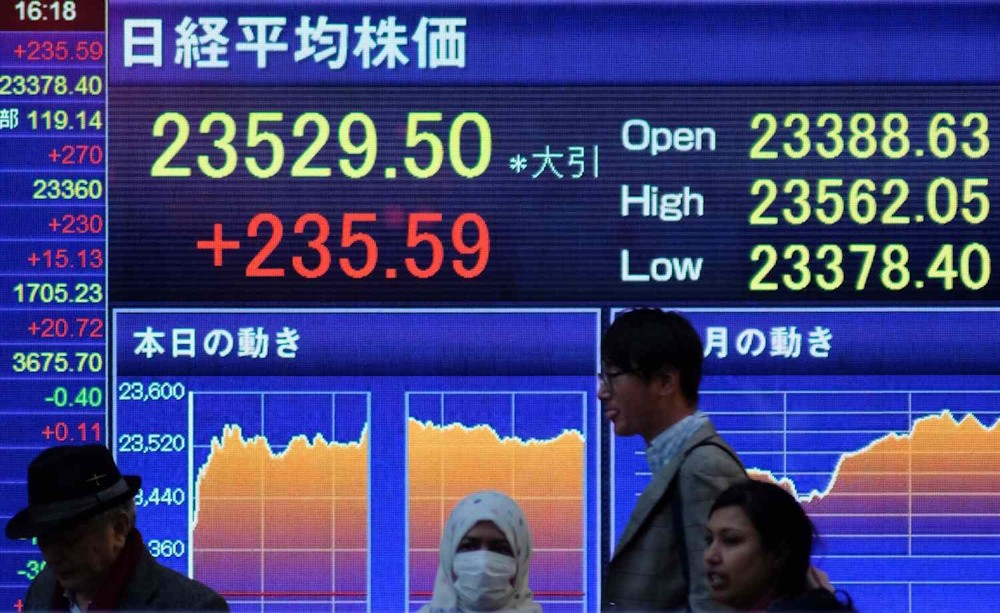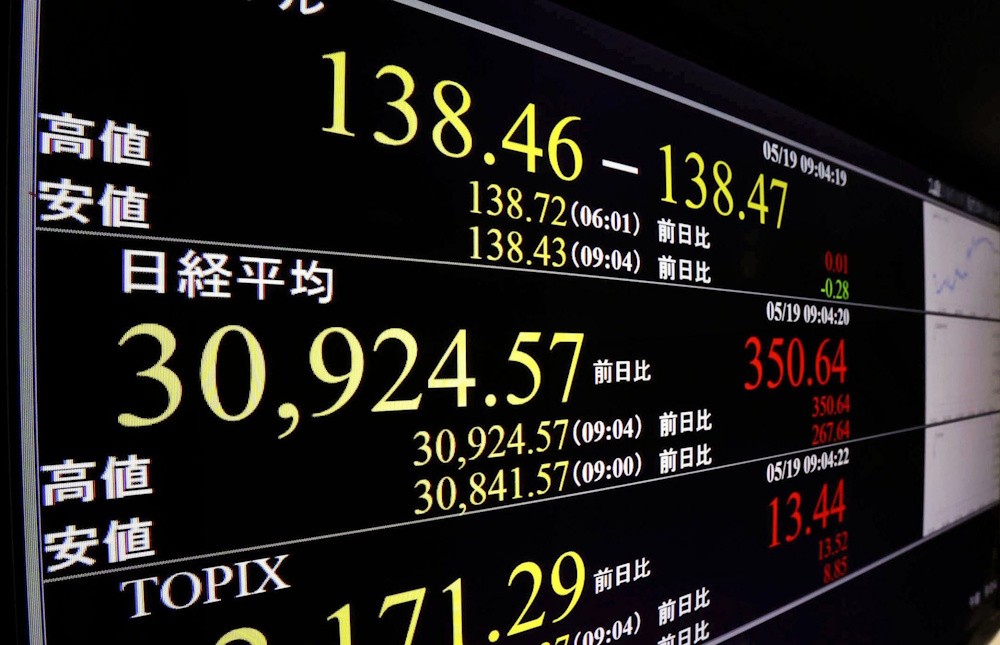
Japan’s Nikkei share average experienced a decline of over 3% on Wednesday, primarily influenced by a significant selloff in artificial intelligence-related stocks, which followed overnight losses in US technology shares. However, gains in defensive sectors, particularly pharmaceuticals, contributed to mitigating the broader market decline. The Nikkei 225 experienced a decline of 3.3%, reaching 56,710.43 by the midday break, whereas the broader Topix index saw a decrease of 1%, settling at 3,727.24. Japanese equities followed Wall Street’s downward trajectory as US technology stocks relinquished some of the gains achieved during Monday’s rally, which was ignited by Nvidia CEO Jensen Huang’s unexpected return to the company’s leadership position.
The renewed weakness in technology shares has reignited concerns regarding the sustainability of the AI-driven rally. Investors exhibited caution in acquiring AI-linked stocks in the wake of the recent downturn in US technology shares. Nonetheless, the pursuit of undervalued stocks that had lagged in the preceding session contributed to mitigating losses across the wider market. Among the most significant decliners on the Nikkei, Advantest experienced a sharp drop of 14.3%, whereas semiconductor equipment manufacturer Tokyo Electron saw a decrease of 13.11%. SoftBank Group and memory chipmaker Kioxia experienced declines of approximately 15% each.
In contrast, pharmaceutical stocks stood out as the most significant gainers. Otsuka Holdings, Astellas Pharma, and Sumitomo Pharma each experienced an increase of over 6%, positioning them as the leading percentage gainers on the benchmark index. Medical equipment manufacturer Terumo experienced an increase of 6.24%. Other heavyweight stocks also contributed to mitigating the decline. Sony Group experienced a 3.1% increase, positioning it as the most significant positive contributor to the Topix index. Toyota Motor experienced an increase of 2.51%, whereas Honda Motor saw a modest rise of 0.57%.
Market breadth on the Tokyo Stock Exchange’s Prime Market exhibited a relatively positive stance, even in the face of the significant decline in the Nikkei. As reported by Reuters, 56% of over 1,500 traded stocks experienced an upward movement, 41% faced a decline, while approximately 2% remained stable. The divergence between steep losses in technology stocks and gains in defensive sectors underscored a shift in investor positioning, as concerns regarding elevated valuations and the sustainability of the AI trade exerted pressure on market sentiment.