
Asian defense stocks experienced a rally for the second consecutive session on Tuesday, despite a mixed trading environment in the region. Investors are currently evaluating geopolitical risks following the U.S. attack on Venezuela and the capture of ousted leader Nicolas Maduro. Japanese defense firm Kawasaki Heavy Industries experienced an increase of nearly 6%, while IHI saw a gain of 3.66%. Shares of South Korea’s Korea Aerospace experienced an increase of up to 11% before moderating to a rise of over 9%, while Poongsan saw an increase exceeding 8%. Hanwha Aerospace experienced an increase of 0.99%.
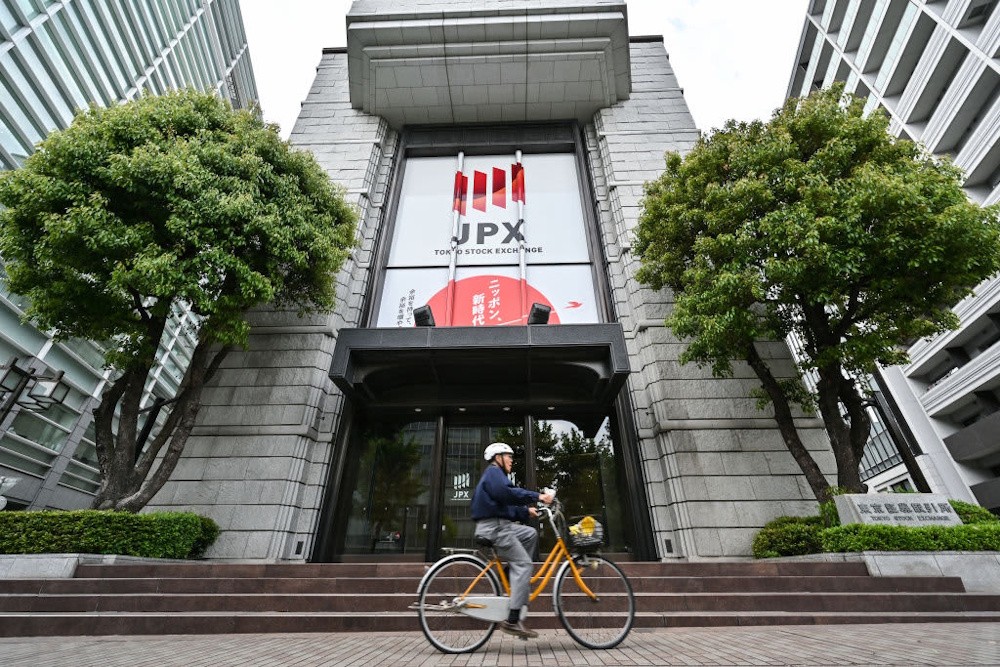
Japan’s benchmark Nikkei 225 index experienced an increase of 1.32%, concluding the trading day at 52,518.08. Meanwhile, the Topix saw a rise of 1.75%, closing at a new record high of 3,538.44. South Korea’s Kospi increased by 1.52% to 4,525.48, while the small-cap Kosdaq experienced a decline of 0.16% to 955.97. Australia’s ASX/S&P 200 decreased by 0.52% to 8,682.8. Australian steel producer BlueScope Steel experienced a notable increase of over 20% following the confirmation that conglomerate SGH had presented a non-binding indicative offer in conjunction with American steel producer Steel Dynamics to acquire the company. The transaction would assign a valuation of approximately $9 billion to BlueScope.
The Hang Seng Index in Hong Kong experienced an increase of 1.22%, whereas the mainland CSI 300 saw a rise of 1.55%, reaching a level of 4,790.69. Singapore’s benchmark STI increased by as much as 0.7%, reaching a new record high. Singapore banks concluded 2025 with yet another record year, as earnings exceeded expectations, contributing to a rise in financial stocks of over 20%, despite experiencing periods of market volatility, according to analysts. As we project into 2026, bank profits are anticipated to remain stable despite a contraction in lending margins, bolstered by robust wealth inflows and solid returns on equity. Nonetheless, the bank warned that risks persist, noting that Singapore’s market is characterized by mature, value-oriented companies, which constrains its engagement with the accelerated growth often associated with technology stocks. A regional slowdown, especially in China, would exert pressure on external demand, while an increase in oil prices, due to the ongoing volatility in Venezuela, could elevate operating costs.
U.S. equity futures exhibited little movement during the early hours of trading in Asia. In the U.S. overnight, equities experienced an uptick despite the U.S. military action against Venezuela, coinciding with an increase in crude oil prices. Investors appeared to be wagering that this development would not escalate into a wider geopolitical confrontation. The Dow Jones Industrial Average increased by 594.79 points, representing a rise of 1.23%, concluding at 48,977.18, with the 30-stock index reaching a new all-time high during the session. The S&P 500 experienced an increase of 0.64%, concluding the session at 6,902.05, while the Nasdaq Composite experienced an increase of 0.69%, ending the session at 23,395.82.