
On Friday, markets in the Asia-Pacific region faced declines as oil prices surged, propelled by escalating concerns that a prolonged conflict in the Middle East could further constrain energy supplies, thereby amplifying fears of a potential global economic downturn. In a speech delivered late Thursday, Iran’s new Supreme Leader Mojtaba Khamenei asserted that the Strait of Hormuz, a vital passage for global oil trade, should remain closed. He further indicated that Tehran may contemplate the possibility of opening additional fronts in the ongoing conflict should it persist. Alireza Tangsiri, the commander of the Iranian Revolutionary Guard Corps Navy, reiterated the threat in a social media post, cautioning of “the harshest blows to the aggressor enemy.” Participants in the prediction market Kalshi have increased their bets regarding the probability of a recession in the U.S. economy this year, with the likelihood rising to 32% — the highest level observed this year. International benchmark Brent crude saw a notable rise of 9.22%, finishing at $100.46 per barrel on Thursday. It represented the first instance that Brent closed above $100 since August 2022. U.S. West Texas Intermediate futures saw a rise of 9.72%, closing at $95.73.
Oil prices are anticipated to remain elevated in the near term as investors incorporate the possibility of a prolonged conflict in the Middle East, as noted by Rob Thummel. However, he anticipates that prices will moderate as the year progresses, considering the likelihood of oil flows resuming through the Strait of Hormuz. “By December, that supply will improve, resulting in higher availability; thus, if you can wait until then, you will be able to purchase oil at a lower cost.” Analysts at Goldman Sachs anticipate that Brent crude will average $98 per barrel in March and April, indicating a 40% rise from the 2025 average, before experiencing a decline to $71 by the fourth quarter. In the event of a one-month disruption in oil flows through the strait, projections indicate that Brent prices are expected to average $110 in March, followed by a decline to $76 by year-end, according to Goldman. U.S. President Donald Trump has sought to alleviate worries about rising oil prices, claiming that the U.S., as the foremost global oil producer, stands to benefit from higher oil prices, while underscoring that his main priority continues to be preventing Iran from obtaining nuclear weapons.
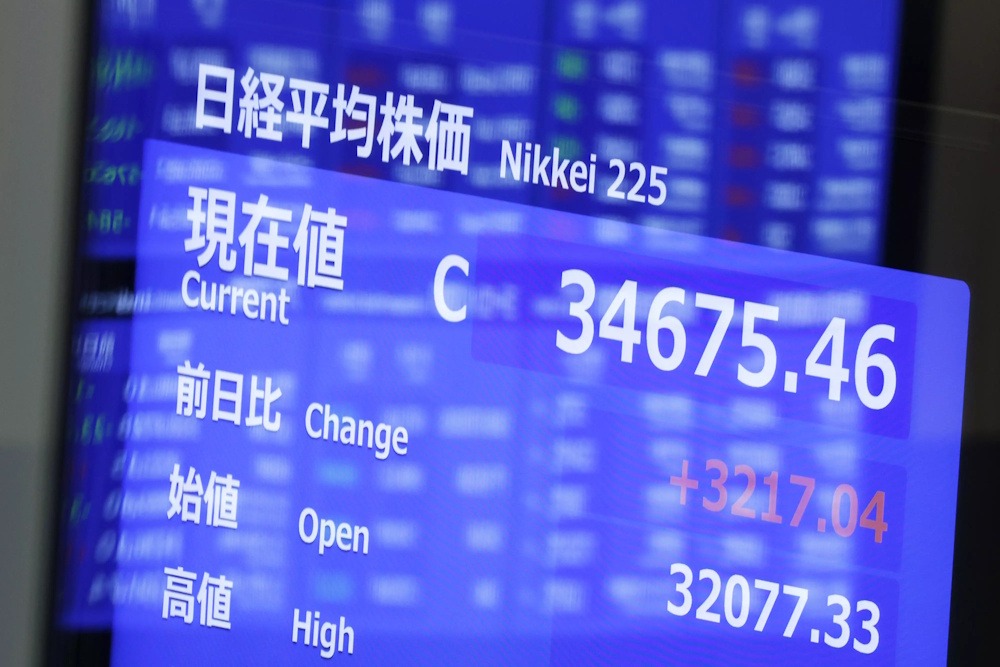
Treasury Secretary Scott Bessent indicated Thursday night that the U.S. would allow the purchase of sanctioned Russian crude currently at sea on a temporary basis to stabilize energy markets, while describing the price spike as a “temporary disruption.” Australia’s S&P/ASX 200 recorded a decrease of 0.14%, finishing the trading day at 8,617.1. Japan’s Nikkei 225 recorded a drop of 1.16%, concluding at 53,819.61, while the broader Topix index fell by 0.57%, ending at 3,629. Honda Motor faced a decline exceeding 6%, representing the most substantial adverse effect on the Nikkei, after the automaker forecasted its first annual loss in almost 70 years. South Korea’s blue chip index recorded a decrease of 1.7%, concluding at 5,487.24, whereas the small-cap index registered an uptick of 0.4%, arriving at 1,152.96. The Hang Seng index in Hong Kong recorded a decrease of 1%, while the CSI 300 index in mainland China saw a decline of 0.39%.
In the U.S. overnight, significant stock indexes reached closing lows for 2026, with the Dow Jones Industrial Average dropping by nearly 740 points, finishing below 47,000 for the first time this year. The S&P 500 experienced a decline of 1.5%, closing the session at 6,672.62, while the Nasdaq Composite saw a loss of 1.8%, finishing at 22,311.98. Futures linked to the 30-stock Dow registered a modest decrease of 0.03%. S&P 500 futures advanced by 0.21%, while Nasdaq 100 futures experienced a rise of 0.12%. Market participants are attentively observing the impending U.S. inflation data. A survey indicates that economists expect the personal consumption expenditures price index, scheduled for release on Friday, to reflect a year-on-year increase of 2.9% in January, with the core index anticipated to rise to 3.1%.