
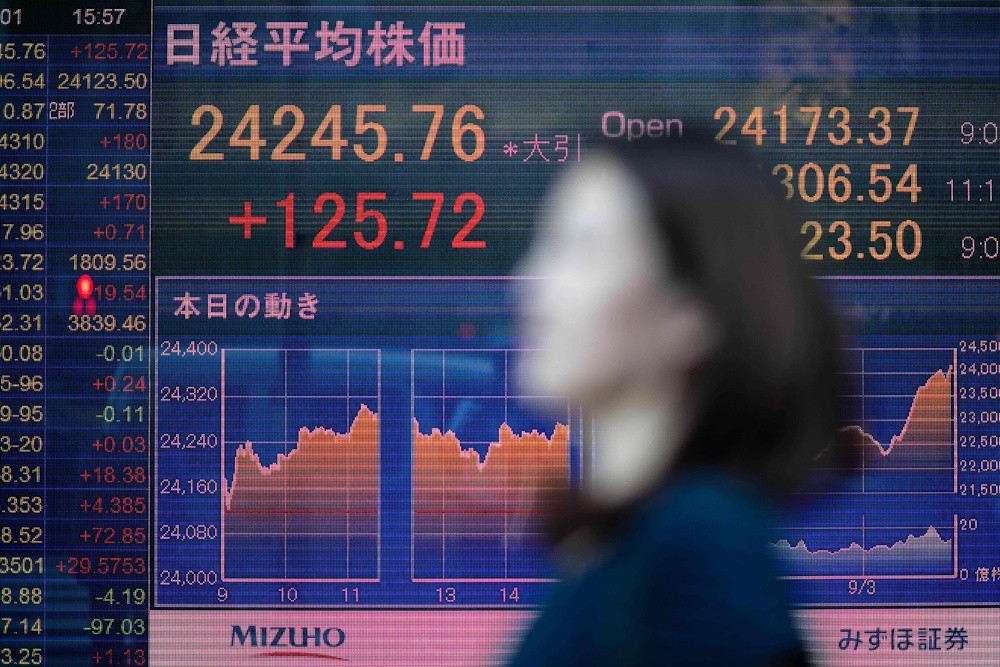
The Nikkei share gauge experienced an uptick on Friday, bolstered by a surge in AI-related stocks. Concurrently, the nation’s bond market and currency showed improvement, influenced by a possible shift in the investment strategy of Japan’s substantial pension funds. The benchmark Nikkei 225 experienced an increase of 2%, reaching 69,121.02, while the broader Topix saw a rise of 0.76%, climbing to 4,050.82. The yield on Japan’s 10-year government bond declined by 10 basis points to 2.775%, pulling back from a three-decade peak. The yen appreciated by 0.43% relative to the US dollar, reaching a value of 161.69. Tech shares on Wall Street experienced a significant increase following the announcement from chipmaker Micron Technology regarding its intention to invest over $250 billion in the United States by 2035.
“Japanese stocks took cues from the rally of the US technology stocks overnight,” stated Shuutarou Yasuda. The market exhibited a sense of optimism regarding the continuation of peace talks between the US and Iran, resulting in a decline in oil prices. Chip-related shares propelled the Nikkei’s upward movement, with Sumco experiencing a notable increase of 15.40%, positioning itself for its highest closing value since September 2007, while Advantest saw a rise of 8.54%. SoftBank Group, a technology investment conglomerate, experienced an increase of 11.33%. The gains in bonds and the currency were influenced by remarks from Finance Minister Satsuki Katayama on Thursday, indicating that the government would consider strategies to incentivise pension funds, including the Government Pension Investment Fund, to boost investments in domestic financial assets.
The prospect of Japan’s largest pension investors directing more funds into local markets has enhanced sentiment across bonds and the yen, both of which have encountered persistent pressure in recent years. “Katayama’s remarks helped reverse the selling trend of the Japanese government bonds, and the yen,” stated Masahito Sugawara. Currently, 50% of the assets held by Japanese pension funds are allocated to foreign investments. The market anticipated that a potential adjustment in asset allocation would favourably impact Japanese assets.
Retail trade and insurance sectors underperformed, with Fast Retailing declining 4.23%, representing its most significant single-day decrease since November 2025, while Tokio Marine Holdings experienced a loss of 3.02%. In the Nikkei 225, 116 stocks advanced while 107 declined, leaving two stocks unchanged.
