
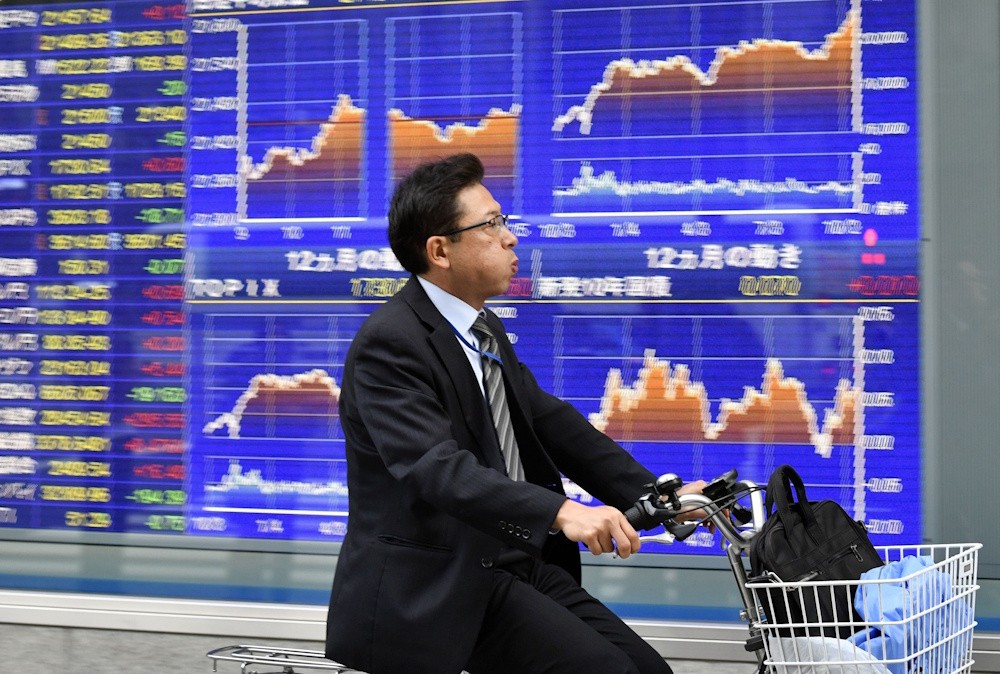
Japan’s Nikkei share average experienced a decline on Wednesday, driven by escalating tensions in the Middle East that prompted investors to pivot away from high-performing technology stocks sensitive to fluctuations in energy prices. The benchmark Nikkei 225 Index declined by 1.89%, closing at 64,179.27, marking a reversal from a 2.1% increase in the previous session. The broader Topix declined by 1.25%, settling at 3,847.60. The United States executed military strikes against Iran on Tuesday, a direct response to the downing of a military helicopter, thereby heightening apprehensions surrounding the potential for a peace agreement.
Price pressures stemming from the Gulf crisis have resulted in a notable rise in Japanese wholesale inflation, achieving its peak rate in three years. This development has consequently placed upward pressure on domestic bond yields, as indicated by data released on Wednesday. “Declines are centred on AI- and semiconductor-related shares, as heightened tensions in the Middle East and upward pressure on domestic interest rates prompted investors to focus more on relative valuations,” stated Wataru Akiyama. Consequently, the decline in the Topix appears relatively modest when compared to the (tech-heavy) Nikkei.
On the Nikkei index, 99 stocks experienced an advance, while 126 stocks faced a decline. The largest losers were predominantly technology-related stocks, with Taiyo Yuden experiencing a decline of 12.9%. This was followed closely by Furukawa Electric, which fell by 11.7%, and Sumitomo Electric, also down by 11.7%. Nintendo experienced a notable decline, falling 6.76% following the video game giant’s presentation of upcoming titles that failed to meet investor expectations. The largest gainers on the Nikkei included developer Mitsubishi Estate, which rose by 5.2%. Following closely was Tokyo Disneyland operator Oriental Land, with an increase of 4.3%, and Screen Holdings, which experienced a gain of 4.2%.
