
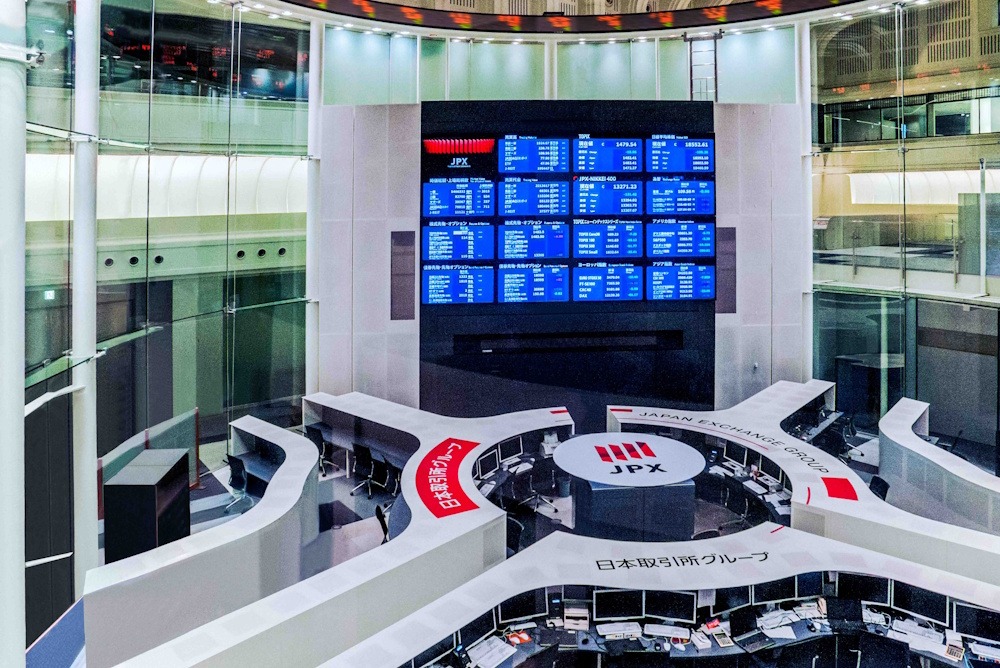
On August 3, Tokyo stocks experienced a decline, with the Nikkei 225 finishing at 63,445.53, reflecting a decrease of 1.4%. This downturn was attributed to the sell-off of electronics and auto shares following a coordinated U.S.-Japan yen-buying intervention, which resulted in a significant appreciation of the currency, thereby undermining the weak-yen support that had previously benefited exporters. The broader Tokyo market exhibited signs of weakness, with the primary pressure being exerted on export-oriented manufacturers and technology shares. The decline followed a 2,494-point surge on July 31, when investors bought back semiconductor and artificial intelligence-related shares after the Bank of Japan kept interest rates unchanged and indicated that inflation risks remained tilted to the upside. The August 3 session marked a shift in the market’s central concern. Throughout July, trading in Tokyo was primarily characterised by the unwinding and subsequent recovery of the AI and semiconductor sectors. On Monday, currency policy re-emerged as a central theme in the market discourse following the confirmation of a rare coordinated intervention by Japan and the United States aimed at bolstering the yen. Nikkei market framing focused on the rapid reversal of the yen and its implications for exporters. The dollar, previously positioned at approximately 160.33 yen during the last Tokyo stock-market close, experienced a decline to the 157-yen range in early trading and momentarily neared 155 yen in offshore transactions. That compelled investors to reevaluate their earnings projections for automakers, electronics manufacturers, and various firms with substantial international sales.
The yen’s sharp rise adversely affected shares that had gained the most from currency weakness. A weaker yen enhances the value of overseas earnings upon conversion into Japanese currency, whereas a stronger yen produces the contrary effect. The move consequently triggered a sell-off in the automotive, electronics, and other sectors sensitive to exports. Toyota Motor and Murata Manufacturing faced significant pressure in early trading, illustrating the direct effects of the yen’s rebound on exporters and electronic-component suppliers. Investors exhibited a degree of caution regarding chip and AI-related shares following the pronounced volatility observed in late July. The market reaction demonstrated the rapidity with which the weak-yen trade can reverse. For months, investors have regarded currency depreciation as a boon for Japanese equities, especially benefiting exporters and firms with international revenue streams. The joint intervention compelled an abrupt reassessment of that assumption. Simultaneously, the appreciation of the yen provided a measure of relief for households and companies reliant on imports. A firmer currency reduces the yen cost of imported fuel, food, raw materials, and industrial components, thereby alleviating some of the inflationary pressures that had accumulated during the yen’s decline toward 164 to the dollar.
The Ministry of Finance confirmed that Japan and the United States had conducted coordinated yen-buying intervention and stated that authorities would not hesitate to take further action. Source reported that the yen appreciated to its peak level since early May before retreating toward the mid-156 range. The involvement of U.S. Treasury Secretary Scott Bessent lent additional weight to the intervention. Source Breakingviews reported that the action resulted in the yen appreciating over 4% against the dollar, thereby intensifying the pressure on the Bank of Japan to persist with its policy normalisation efforts. The foreign-exchange move occurred just days after the BOJ maintained its short-term policy rate at 1% on July 31. The decision was anticipated; however, it did not fully align with dovish expectations. Board member Hajime Takata expressed dissent regarding the decision, advocating for an increase in rates to 1.25%. The Bank of Japan cautioned that underlying inflation may surpass its 2% target. Governor Kazuo Ueda indicated that the central bank will examine upside price risks with greater scrutiny starting from its next meeting. The BOJ also highlighted global AI-related demand and yen weakness as potential inflation risks, indicating that rising prices for semiconductors and other durable goods could influence Japan’s overall price landscape. The coordinated intervention has rendered the Bank of Japan’s policy trajectory more intricate. If the yen stabilises, the central bank may have additional time to assess whether inflation is becoming entrenched. If the currency weakens again, market pressure for another rate hike could intensify rapidly.
Yields on Japanese government bonds indicated that tension. Source reported that the two-year JGB yield briefly reached 1.545%, its highest level since 1995, as markets priced in a greater chance of an earlier BOJ rate increase. Shorter-dated yields exhibit heightened sensitivity to fluctuations in expectations surrounding monetary policy. Longer-term yields have maintained significance as investors closely monitor the potential impact of the government’s fiscal and investment strategies on borrowing pressures. Prime Minister Sanae Takaichi’s administration is implementing a strategy that encompasses over 370 trillion yen in public and private investment through fiscal 2040, with a focus on sectors such as semiconductors, artificial intelligence, energy security, defence, shipbuilding, robotics, and space. The government is contemplating household relief measures, which encompass food-related consumption-tax relief. Such measures may provide assistance to consumers; however, they would prompt concerns regarding revenue replacement and fiscal discipline if funded through increased debt issuance. For households, the appreciation of the yen and the decline in oil prices represented the most favourable developments of the day. TV Tokyo’s extensive business reporting has consistently highlighted inflation, wage dynamics, energy expenses, and the disparity between nominal salary hikes and actual purchasing power. A stronger yen directly alleviates some of that pressure by lowering import costs.
The impact, however, will hinge on the durability of the currency movement. Previous Japanese intervention earlier in 2026 yielded only transient gains for the yen. This time, the coordination with the United States enhanced the credibility of the move; however, traders stayed vigilant regarding the potential for interest-rate differentials to once again exert downward pressure on the yen. Oil prices offered an additional avenue of respite. Brent crude experienced a decline exceeding 4%, settling at approximately $83.88 per barrel, following U.S. President Donald Trump’s announcement of impending discussions with Iran on Monday. He had previously cancelled a forthcoming assault in an attempt to negotiate an agreement regarding the Strait of Hormuz and Iran’s nuclear initiative. The decline in oil prices alleviated worries regarding a potential resurgence of imported inflation. Japan relies heavily on energy imports, thus a decline in crude prices has a direct positive impact on airlines, logistics firms, utility providers, chemical manufacturers, industrial producers, and households. The combined effect of a stronger yen and lower oil is potentially significant for Japan’s cost structure. In July, concerns emerged in the market regarding the potential impact of a depreciating yen and crude oil prices hovering around or exceeding $90, which could lead to increased costs for petrol, electricity, food distribution, and industrial inputs. August commenced with a simultaneous alleviation of both pressures. That relief was insufficient to bolster equities, as exporters faced the immediate burden of the yen’s appreciation. Investors thus encountered an alternative tradeoff: measures that benefit households and domestic inflation may adversely affect the international earnings of major publicly traded manufacturers.
Corporate movers mirrored that divide. Exporters and electronics shares experienced a decline, as investors monitored the potential advantages for domestic-demand companies, airlines, retailers, and utilities stemming from lower oil prices and a stronger currency. The market has not yet completely shifted into those sectors; however, the prevailing trend indicates a resurgence of interest in firms that are less reliant on yen depreciation. Shares related to semiconductors and artificial intelligence exhibited considerable volatility. The sector experienced a notable increase on July 31, driven by robust U.S. technology earnings and a significant recovery among South Korean chipmakers. However, investors exhibited caution in extending the rally due to ongoing instability in currency markets and South Korea itself. South Korea’s Kospi experienced a significant decline on August 3, following its remarkable recovery on July 31. Asian stocks faced challenges at the beginning of the week following a tumultuous July, as investors remained concerned about AI capital expenditures and the speed at which these investments will yield returns. The ongoing uncertainty persisted in influencing Japanese companies associated with AI servers, data centers, advanced memory, electronic components, and semiconductor equipment. Kioxia Holdings, Tokyo Electron, Advantest, SCREEN Holdings, Kokusai Electric, and SoftBank Group continued to play a pivotal role in shaping market sentiment. The AI theme is now regarded as more than just a straightforward growth narrative. Investors are differentiating between firms that benefit from AI infrastructure expenditures and those whose valuations already reflect expectations of sustained high demand. Earnings, guidance, and margin trends are increasingly taking precedence over general excitement surrounding artificial intelligence.
The global backdrop exhibited a mixed nature, yet it appeared less hostile compared to the situation observed in late July. U.S. and European stock futures experienced an uptick following a decline in oil prices and a positive shift in diplomatic prospects in the Middle East. However, Asia exhibited continued weakness due to the yen shock, volatility in South Korea, and persistent concerns regarding AI, which collectively dampened risk appetite. The disparity in interest rates between the U.S. and Japan continues to be the fundamental driver in currency markets. Even after intervention, the dollar continues to provide superior yields compared to the yen. Unless investors are convinced that the BOJ will implement additional rate hikes or that the Federal Reserve will shift towards a more accommodative policy stance, the yen may continue to face susceptibility to renewed selling pressure. Central-bank communication is thus of paramount importance. Markets will observe if BOJ officials reinforce the hawkish stance communicated on July 31 or attempt to mitigate the perception that intervention and U.S. pressure are influencing Japanese monetary policy. The issue is delicate as the government aims to foster growth via investment and provide relief to households, whereas the BOJ is tasked with maintaining its credibility regarding inflation and its independence. Excessive fiscal expansion may lead to a depreciation of the yen and an increase in yields; conversely, excessive monetary tightening could disrupt equity markets and elevate debt-servicing costs.
What to watch next: whether the Nikkei can maintain its position above 63,000 after retracing some of the gains from the July 31 rally, whether exporters will continue to decline as the yen appreciates, and whether domestic-demand shares, including airlines and utilities, will benefit from lower oil prices and a stronger currency. Investors will closely observe whether the yen maintains its position in the range of 155 to 157 per dollar or depreciates back toward 160. A renewed slide would test the credibility of the joint intervention and could heighten expectations for another BOJ rate hike. The two-year JGB yield represents a significant policy indicator, having attained its peak since 1995. A continued rise would indicate that investors are pricing in earlier tightening, while a retreat would suggest the market views intervention as enough to stabilise the yen for now. Other key factors will include Brent crude hovering around the low-$80 range, the results of U.S.-Iran negotiations, South Korean semiconductor equities, and forthcoming Japanese earnings reports. August 3 indicated that Tokyo’s forthcoming developments will not rely solely on AI; factors such as currency policy, oil prices, and the credibility of the BOJ have become equally significant.
