
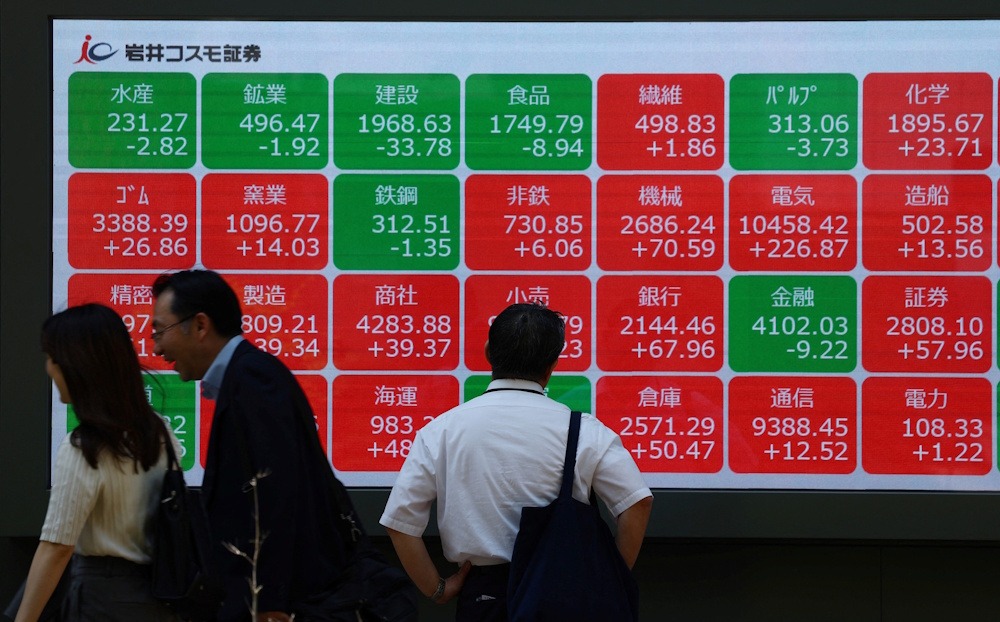
Japan’s Nikkei share gauge experienced a significant decline on Tuesday, influenced by a global increase in bond yields and escalating oil prices that dampened market sentiment. The benchmark Nikkei 225 experienced a decline of 1.23%, reaching 65,070.58 in early trading, indicating a potential for a second consecutive decrease. The broader Topix declined by 1.75%, settling at 4,040.16. The selloff followed overnight declines in US equity markets, as rising oil prices and Treasury yields heightened inflation concerns and apprehensions regarding the persistence of tight monetary policy.
Pressure is also mounting in Japan, as the government’s bond yields remain close to levels not seen in decades. US and Iranian officials engaged in separate discussions with mediators on Monday, marking a renewed attempt to resolve seven months of conflict that has disrupted energy markets. “It seems fair to say that these concerns about inflation, and the resulting rise in interest rates, are weighing on the stock market,” said Wataru Akiyama.
“Regarding AI-related shares, which have been a driving force in the Japanese stock market, there is a growing perception that they are relatively overvalued in the context of rising interest rates.” On the Nikkei, 26 stocks advanced while 199 declined. The largest losers by percentage were NEXON, down 14.57%, followed by Idemitsu Kosan, down 5.1%, and Chubu Electric, which sank 4.46%. Tokai Carbon saw the biggest gains, up 3.29%, followed by Screen Holdings (up 2.65%) and Lasertec (up 2.48%).
