
Asian stocks concluded the trading session on Monday with a mixed performance, as ongoing tensions in the Middle East continued to weigh on sentiment. Additionally, hawkish indications from Federal Reserve policymakers strengthened the argument for a potential rate hike later this year. Meanwhile, fresh data revealed a further deceleration in China’s industrial profit growth for the month of August. Oil prices and bond yields continued their ascent as U.S. President Donald Trump dismissed Iran’s recent proposal to reopen the Strait of Hormuz and indicated the potential for new military strikes following the midterm elections. Trump indicated that he anticipates negotiations will recommence this week. Iran stated it would not ease its demands. Iran’s Foreign Minister Abbas Araghchi expressed optimism for a diplomatic resolution, yet cautioned that the nation stands ready for conflict with the United States to recommence. The U.S. dollar index faced downward pressure yet remained close to a two-month peak, whereas gold experienced a decline of nearly 3 percent, approaching $4,150 an ounce, influenced by rising yields and hawkish expectations.
Brent crude prices surged nearly 3 percent, trading above $107 a barrel in Asian markets, driven by renewed apprehensions regarding energy supply. China’s Shanghai Composite index declined by 1.67 percent, settling at 3,823.62, following the release of data indicating that industrial profits in China experienced their slowest growth this year in August, with an increase of merely 4.2 percent compared to the previous year. The Hang Seng index in Hong Kong increased by 0.54 percent to 24,642.51, recovering from three consecutive days of declines as China announced a two-month extension of the trade truce with the United States after a recent summit. Japanese markets experienced a decline as a measure of service-sector inflation in Japan accelerated in August, marking the fastest annual increase in over two years. Additionally, minutes from the Bank of Japan’s meeting on July 30 to 31 indicated a consensus regarding the growing risks of inflation, fuelling speculation that the central bank might increase its benchmark rate for the second consecutive month during the upcoming board meeting in October.
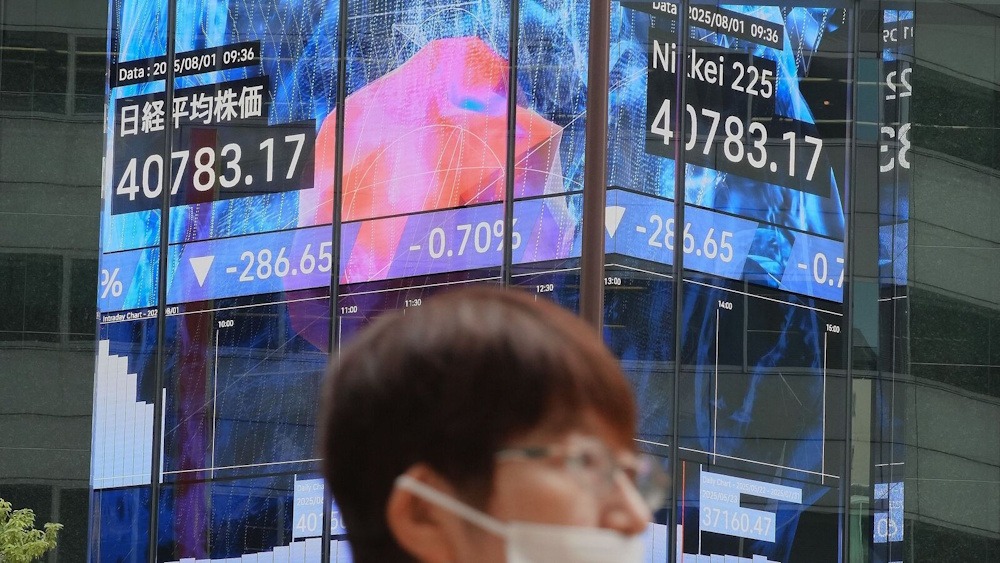
The Nikkei average concluded the trading session down 0.73 percent at 65,877.62, relinquishing earlier gains and ending a five-day streak of increases. The broader Topix index concluded the trading session with a decline of 0.40 percent, finishing at 4,112. Memory-chip manufacturer Kioxia Holdings and electronics company Ibiden both experienced declines exceeding 4 percent in anticipation of quarterly results from U.S. memory-chip producer Micron Technology, scheduled for release this week. Seoul stocks experienced a significant decline as trading resumed following a holiday. The Kospi index experienced a decline of 2.70 percent, settling at 6,889.74, as technology stocks faced significant selling pressure. This downturn was driven by apprehensions regarding a substantial increase in long-term U.S. Treasury yields and deteriorating sentiment concerning certain segments of the artificial intelligence supply chain.
Samsung Electronics experienced a decline of 5.4 percent, while SK Hynix saw a loss exceeding 5 percent in their initial trading session following the Chuseok holiday. Australian markets experienced a modest increase, driven by gains in the financial sector in anticipation of a widely expected 25-basis point rate cut from the RBA on Tuesday. The benchmark S&P/ASX 200 inched up 0.17 percent to 8,679.70, while the broader All Ordinaries index finished marginally higher at 8,850.70. Across the Tasman, New Zealand’s benchmark S&P/NZX-50 index concluded the day 0.14 percent higher at 13,830.68, effectively arresting some of the declines observed in the prior session. U.S. stocks experienced an uptick on Friday, marking their initial weekly gain in three weeks, as oil prices retreated following reports of a potential agreement to resolve the ongoing U.S.-Iran conflict. This development contributed to alleviating the upward pressure on Treasury yields, which had recently reached multi-decade highs.
It has been reported that Iran has presented a proposal to the United States aimed at concluding the conflict and facilitating the reopening of the Strait of Hormuz within a week, contingent upon Washington’s acceptance of its stipulations. The yield on the 10-year Treasury experienced a brief increase to 5.22 percent earlier today, following a survey indicating that U.S. consumer sentiment has declined to a four-month low in September. This decline is attributed to escalating concerns over inflation, with year-ahead inflation expectations climbing to 4.6 percent in September, marking the highest level since June and an increase from 3.4 percent prior to the onset of the Iran conflict. The S&P 500 increased by half a percent, effectively ending a three-day decline. The Dow advanced by 0.9 percent, while the tech-heavy Nasdaq experienced a gain of half a percent.
