
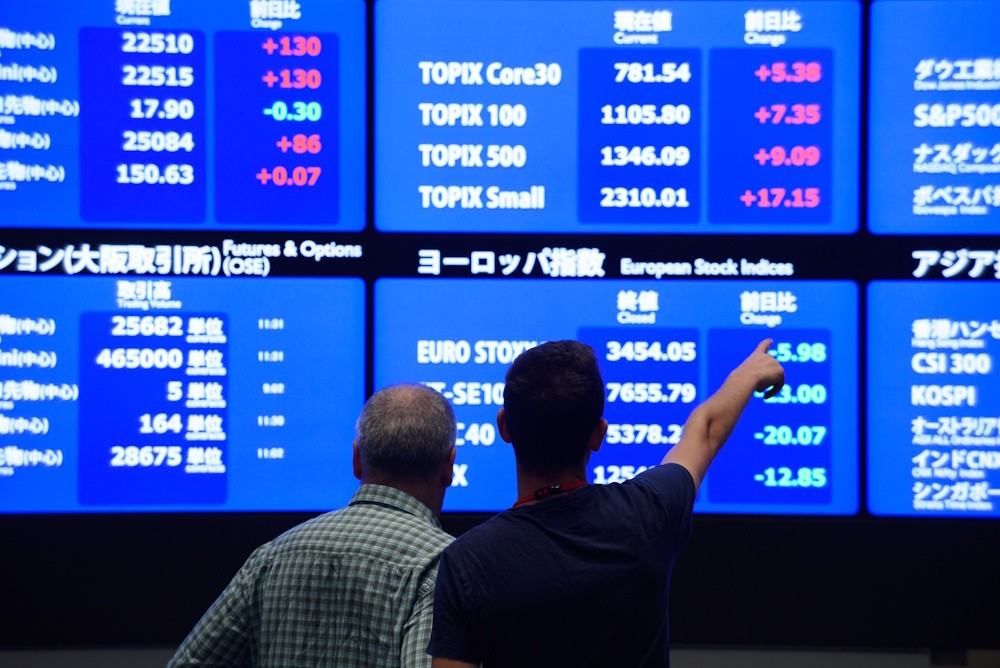
Japan’s Nikkei share gauge surged past the significant 71,000 level for the first time on Thursday, following the extension of the ceasefire between the United States and Iran. This development has alleviated geopolitical tensions and bolstered risk appetite among investors. The benchmark Nikkei 225 advanced 1.65% to close at 71,053.49, after touching an intraday high of 71,398.58. The broader Topix gained 1.37% to 4,068.18, also an all-time high. The U.S. and Iran have made public the text of an interim agreement aimed at concluding their conflict, with U.S. President Donald Trump issuing a warning of renewed military action and the potential targeting of Iranian officials should they not adhere to their obligations.
Markets in Asia responded to a hawkish stance from the U.S. Federal Reserve, which maintained its interest rates. The dollar exhibited broad strength, whereas the yen reached a near two-year low, nearing levels that have historically triggered intervention from Tokyo in the markets. “The Nikkei 225 has risen by more than 5,700 over the past five trading days, making profit-taking likely due to short-term overheating,” Takayuki Miyajima stated in a note. Growth expectations for AI and semiconductor-related stocks are expected to persist in bolstering the market. Furthermore, declining crude oil prices and optimism regarding a potential improvement in the Middle East situation could serve as a supportive factor for Japanese equities.
Chip-related shares propelled the Nikkei’s ascent, with Murata Manufacturing and Screen Holdings surging by 8.10% and 7.21%, respectively. Banks also advanced, supported by Mitsubishi UFJ Financial Group, which rose 3.12%. Among the underperformers, non-ferrous metals and oil-related sectors experienced a decline. The market breadth exhibited a notably positive trend, with 136 advancers in the Nikkei 225 juxtaposed against 84 decliners and 5 remaining unchanged.
