
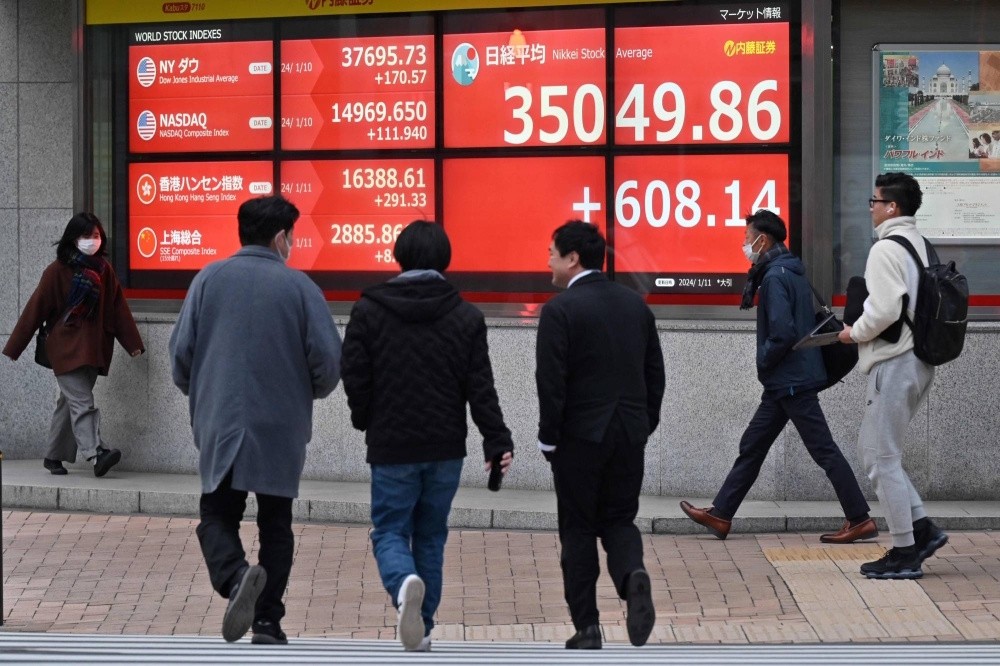
Japan’s Nikkei share average concluded the trading session down by 2% on Tuesday, influenced by declines in semiconductor-related heavyweights following a downturn in South Korea’s Samsung Electronics, which led to a significant drop in the benchmark KOSPI. The Nikkei NI225 fell 2.12% to close at 68,256.96. The broader Topix index ended 0.97% lower at 4,062.26 after hitting a record high of 4,137.62 earlier in the session, as investors bought financial and other beaten-down value stocks. “The market looked into the shares of Samsung Electronics 005930, which fell even as the memory chipmaker’s forecast beat the market forecast,” said Kazuaki Shimada. Shares of Japan’s high-flying memory maker Kioxia fell 11.26%, while chip-related companies Advantest and Tokyo Electron experienced declines of 2.25% and 3.94%, respectively.
The tech-heavy Nikkei typically mirrors the movements of South Korea’s benchmark index, which similarly has a significant concentration in chip stocks. The benchmark KOSPI fell as much as 8%, triggering circuit breakers for the sixth time this year, as Samsung Electronics tanked as much as 10%. The world’s largest memory chipmaker on Tuesday projected a 19-fold increase in second-quarter operating profit compared to the same period last year. “In the short term, investors will keep selling AI stocks to book profits, but at the same time they are buying undervalued stocks,” stated Naoki Fujiwara.
Japan’s banking shares experienced an uptick, with Mitsubishi UFJ Financial Group rising by 2.26%. Mizuho Financial Group and Sumitomo Mitsui Financial Group saw modest increases of 0.39% and 0.18%, respectively. Nomura Holdings 8604 experienced a 3% increase, positioning it as the leading percentage gainer within the Nikkei index. Toyota Motor 7203 concluded the trading session with an increase of 0.79%. Among the over 1,500 equities listed on the prime market of the Tokyo Stock Exchange, 47% experienced an increase, 49% saw a decline, and 2% remained unchanged.
