
On Tuesday, shares of South Korean automotive firms experienced an uptick following the announcement by U.S. Secretary of Commerce Howard Lutnick, who confirmed that the reduced U.S. auto tariffs of 15% on South Korea would be applied retroactively, effective from November 1. “We are also removing tariffs on aeroplane parts and will ‘un-stack’ Korea’s reciprocal rate to match Japan and the EU,” Lutnick stated. Carmakers Hyundai Motor and Kia Corp experienced increases of 4.52% and 4.19%, respectively. South Korea’s Kospi experienced an increase of 1.9%, concluding at 3,994.93, whereas the small-cap Kosdaq saw a rise of 0.65%, finishing at 928.42. In November, South Korea’s headline inflation increased by 2.4% year on year, surpassing the anticipated 2.35% rise projected by economists. Core inflation increased by 2% compared to the previous year. The figure remains consistent with October’s rate, reinforcing the argument for the central bank to maintain current policy. The Bank of Korea kept its interest rate at 2.5% for the fourth consecutive meeting last Thursday.
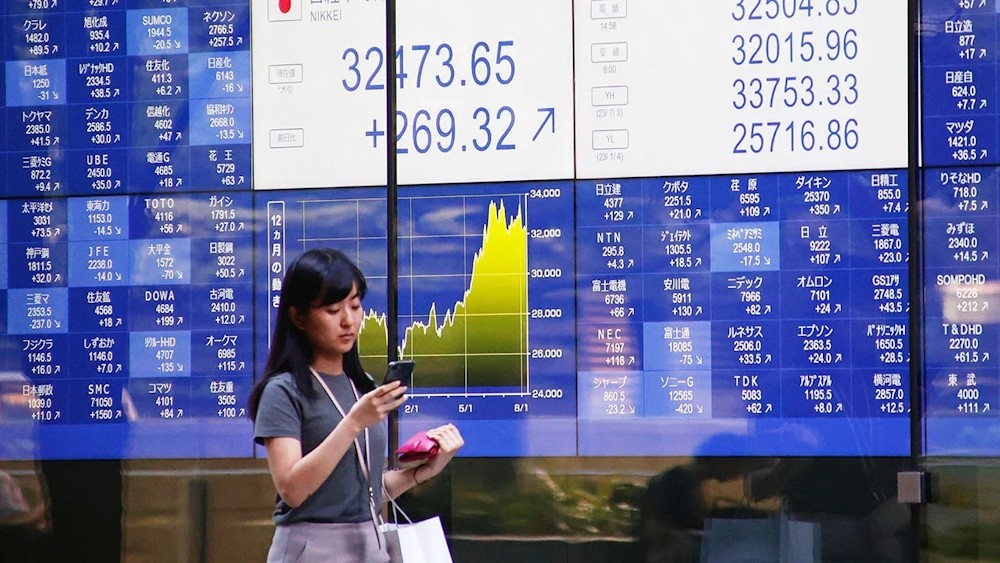
On Tuesday, benchmark indexes across the broader Asia-Pacific region exhibited a mixed performance. Japan’s Nikkei 225 concluded unchanged at 49,303.45, while the Topix ended marginally above neutral at 3,341.06. Among the prominent gainers on the Nikkei 225 was industrial robot manufacturer Fanuc, which rose 6.51% following its partnership announcement with Nvidia to enhance products through artificial intelligence. NGK Insulators gained 7.2%, while Fujikura rose 1.56%. Meanwhile, shares of SoftBank declined over 5% in their third consecutive session of losses, as apprehensions regarding AI valuations persisted. CEO Masayoshi Son stated that he “was crying to sell Nvidia shares” to finance investments in AI, including OpenAI. “I wish to have unlimited money… I just had more need for money to invest into OpenAI, into our opportunities,” he stated.
Yields on the 10-year Japanese Government Bonds increased to 1.88%, marking the highest level since June 2008, driven by escalating speculation regarding a potential rate hike by the central bank as early as this month. The yield on the 20-year JGB rose to 2.915%, the highest since 1999, while the 30-year JGB yield climbed to an unprecedented 3.411%. Australia’s ASX/S&P 200 increased by 0.17%, concluding at 8,579.7. The Hang Seng Index in Hong Kong experienced a modest increase of 0.18%, whereas the CSI 300 in mainland China saw a decrease of 0.48%. Alibaba Group’s shares rose nearly 3% in Hong Kong, marking a third consecutive session of gains following the launch of its Quark AI glasses in China on November 27. India’s Nifty 50 declined by 0.44%, while the BSE Sensex fell 0.42%. Bajaj Housing Finance was among the top losers, dropping 5% after parent Bajaj Finance announced plans to divest up to 2% of its stake in the subsidiary.
U.S. equity futures exhibited minimal fluctuations during Asian trading hours, following a cessation of five consecutive days of gains across all three major benchmarks, as a sell-off in the cryptocurrency market negatively impacted investor sentiment. The S&P 500 declined by 0.53%, concluding at 6,812.63, whereas the Nasdaq Composite decreased by 0.38%, closing at 23,275.92. The Dow Jones Industrial Average experienced a decline of 427.09 points, representing a decrease of 0.9%, concluding at 47,289.33. Overnight, bitcoin experienced a decline of approximately 6%, trading below $86,000. This movement has negatively impacted investor sentiment and exerted pressure on the broader stock market. It was trading at $87,094.03, as of 3:02 p.m. Tuesday Singapore time. The digital currency has faced challenges in maintaining a position above $90,000 since it dipped below that threshold late last month for the first time since April. Other crypto-related stocks, including Coinbase and Strategy, experienced declines during Monday’s U.S. trading session. Stocks associated with artificial intelligence, specifically Broadcom and Super Micro Computer, experienced declines of over 4% and 1%, respectively, suggesting a trend of profit-taking within the sector.