
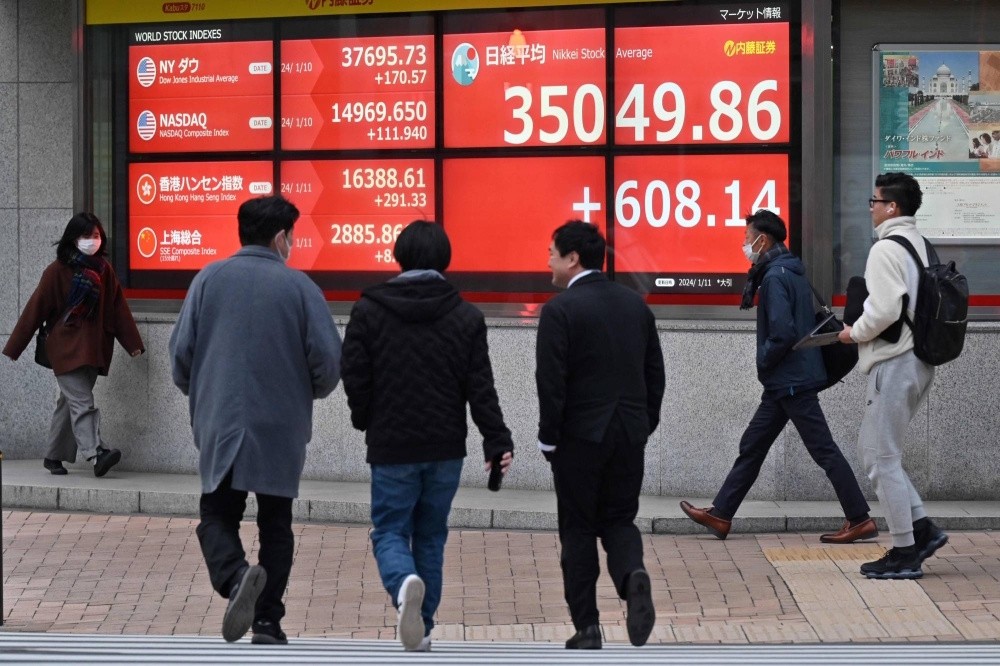
South Korean benchmarks experienced a significant decline on Monday, contributing to broader regional downturns as investors evaluated private data concerning China’s factory activity for January, while gold continued its downward trajectory from Friday. The Kospi index experienced a decline exceeding 5%, settling at 4,949.67, while the Kospi 200 futures plummeted by as much as 5%, leading authorities to implement a temporary trading suspension, as noted in an official statement. Major players SK Hynix and Samsung Electronics experienced declines of 8.69% and 6.29%, respectively. The small-cap Kosdaq experienced a decline of 4.44%, concluding the trading session at 1,098.36.
In January, a private survey indicated that China’s factory activity experienced an uptick, as manufacturers ramped up production and prepared shipments in anticipation of the extended Lunar New Year holiday. The RatingDog China General Manufacturing PMI, as reported, increased to 50.3 in January, up from 50.1 in December, aligning with analysts’ forecasts of 50.3 according to a survey. A reading exceeding the 50 benchmark signifies expansion, whereas a reading below it indicates contraction. The recent data indicates the highest level observed since October, when the private-surveyed PMI registered at 50.6. Japan’s Nikkei 225 experienced a decline of 1.25%, settling at 52,655.18, while the Topix registered a decrease of 0.85%, closing at 3,536.13. The Hong Kong Hang Seng index experienced a decline of 2.32%, whereas the mainland CSI 300 fell by 2.13%, settling at 4,605.98. Australia’s S&P/ASX 200 experienced a decline of 1.02%, settling at 8,778.6. Gold and silver are attracting attention following the significant declines observed on Friday. Spot gold experienced a decline of approximately 6%, settling at $4,538 per ounce, following a significant drop of nearly 10% on Friday, when prices fell below $5,000 an ounce. Spot prices of silver experienced a decline of up to 12%, settling at $74.36 per ounce.
Futures linked to the primary U.S. benchmarks experienced a decline during the early hours of trading in Asia, coinciding with US market’s entry into a new month of trading. Traders are particularly attentive to bitcoin following a sell-off over the weekend. Futures for the Dow Jones Industrial Average declined by 143 points, representing a decrease of 0.3%. S&P 500 futures experienced a decline of 0.6%, whereas Nasdaq-100 futures fell by nearly 1%. Bitcoin fell beneath the $80,000 threshold for the first time since April, indicating that investors are increasingly opting to reduce their exposure to risk in light of the significant downturns in gold and silver markets. Bitcoin last traded at approximately 76,700.
Last Friday, U.S. stocks experienced a decline as technology shares continued to struggle, despite a general approval from investors regarding U.S. President Donald Trump’s selection of Kevin Warsh to head the Federal Reserve. Nonetheless, the S&P 500 managed to achieve a gain in January, even in light of Friday’s losses and the month’s volatile trading conditions. The broad index declined by 0.43%, concluding at 6,939.03, marking its third consecutive day of losses. The Dow Jones Industrial Average experienced a decline of 0.36%, concluding the session at 48,892.47. The tech-heavy Nasdaq Composite exhibited a decline, falling by 0.94% to conclude the trading session at 23,461.82. All three indices experienced declines exceeding 1% at their session lows.
