
Asia-Pacific markets exhibited a mixed performance on Tuesday, reflecting the aftermath of a volatile trading session. Investors are currently evaluating developments related to the conflict in Iran, particularly as the U.S. deadline for a ceasefire agreement draws near. U.S. President Donald Trump issued a warning regarding potential actions against Iran’s civilian infrastructure should a peace agreement not be finalized by Tuesday at 8 p.m., while also indicating that the Iranian leadership appears to be engaging in serious negotiations. Trump reiterated his demand for Iran to open the Strait of Hormuz, thereby facilitating the resumption of traffic through this critical artery for global energy supplies. He cautioned that the U.S. would target every bridge and power plant within four hours if the deadline were not met. The United States and Iran are currently evaluating a framework plan aimed at resolving their ongoing conflict, which has persisted for five weeks. Tehran is resisting President Trump’s insistence on a rapid reopening of the Strait of Hormuz under a temporary ceasefire, while reiterating its call for a permanent resolution to the hostilities.
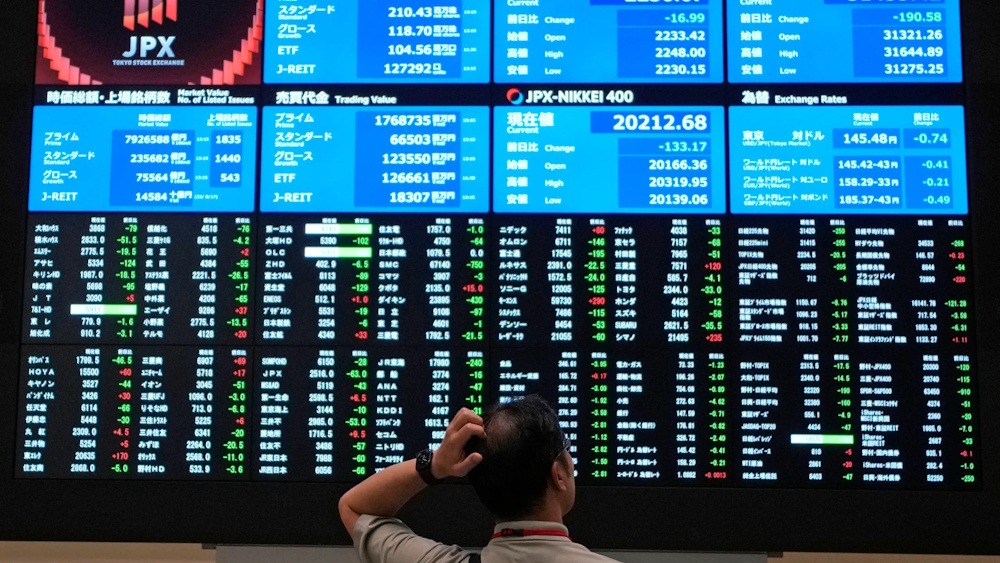
Iran has dismissed the U.S. ceasefire proposal and presented its own 10-point plan, which encompasses a cessation of hostilities in the region, a protocol for safe passage through the Strait of Hormuz, the lifting of sanctions, and provisions for reconstruction, as reported. Trump responded to the proposal, stating that “They made a … significant proposal. While the outcome is not satisfactory, it is important to acknowledge that a considerable advancement has been achieved. We will observe the developments that unfold.” The West Texas Intermediate crude futures experienced an increase of 2.3%, reaching a price of $115 per barrel as of 3:28 pm. Brent crude experienced an increase of approximately 1.5%, reaching a price of $111.37 per barrel. Australia’s S&P/ASX 200 increased by 1.74%, concluding the session at 8,728.8. Japan’s Nikkei 225 experienced minimal movement, closing the day with a slight increase of 0.03% at 53,429.56, whereas the broader Topix index rose by 0.25% to settle at 3,654.02. South Korea’s blue-chip index recorded an increase of 0.82%, closing at 5,494.78, while the small-cap index experienced a decline of over 1%, finishing at 1,036.73.
Mainland China’s CSI 300 held steady at 4,440.62, while the Hong Kong markets were closed on Tuesday in observance of the Easter holiday. India’s Nifty 50 rebounded from earlier declines, increasing by 0.23%, while the Sensex experienced a gain of 0.25%, reflecting the fluctuating trading patterns observed in other Asian markets. “As the deadline approaches, [Trump] seeks to exert additional pressure to ensure they reach the finish line,” Brian Jacobsen, chief economic strategist at Annex Wealth Management. According to Jacobsen, the pronounced volatility in the markets, largely influenced by headlines, has presented investors with the chance to realign their portfolios in pursuit of more sustainable, long-term gains. “When geopolitical concerns impact the market, it typically causes prices to fluctuate without discrimination. That is the moment when a discerning investor may enhance their portfolio.
Jacobsen highlighted “decent entry points” in various sectors, such as utilities, financials, industrials, and technology, while identifying defense and energy firms as the “first-order” beneficiaries following the conflict. In the overnight session on Wall Street, S&P 500 futures exhibited minimal variation, while Nasdaq 100 futures experienced a decline of approximately 0.2%. Futures for the Dow Jones Industrial Average increased by 48 points, representing a 0.1% gain. During Monday’s regular session, the S&P 500 experienced an increase of 0.44%, while the Nasdaq Composite saw a gain of 0.54%. The blue-chip index experienced an increase of 165.21 points, reflecting a rise of 0.36%.