
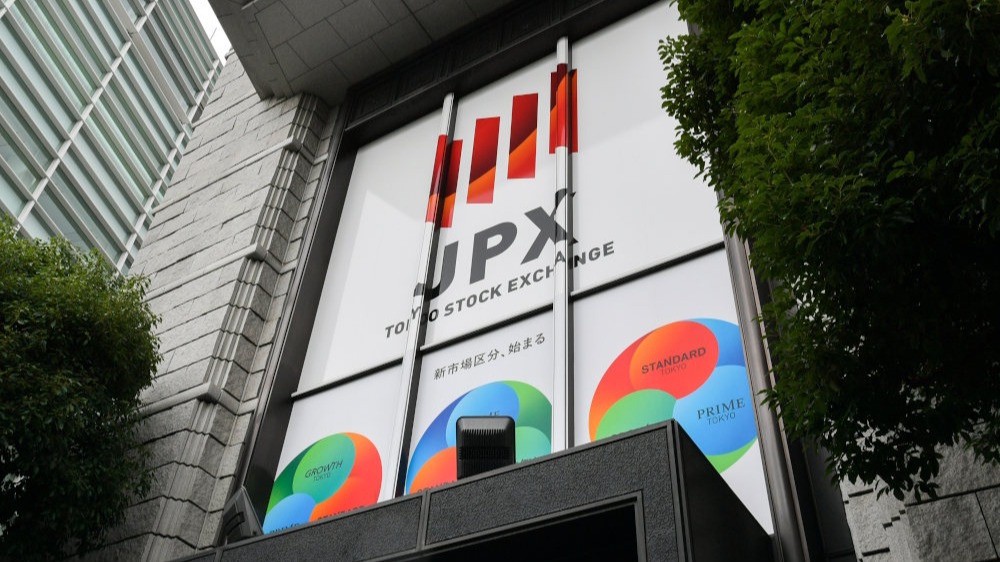
Tokyo stocks concluded the trading session on September 1 with a mixed performance. The Nikkei 225 finished at 66,215.34, reflecting a decline of 96.59 points, or 0.15%. This downturn was influenced by increasing bond yields and a downturn in semiconductor shares. Conversely, the broader TOPIX experienced an uptick, rising by 25.57 points, or 0.62%, to reach 4,181.86, marking its ninth consecutive gain. The Nikkei commenced trading with a significant decline following the overnight drop in U.S. equities, influenced by escalating oil prices and increasing expectations for interest rate hikes. The index commenced at 65,885.47, reflecting a decline of 426.46 points, and dipped to a low of 65,576.61 during early trading before experiencing a gradual recovery. It briefly turned positive during the session but did not possess sufficient momentum to sustain gains into the close. The TOPIX again demonstrated greater resilience than the Nikkei, rising to 4,181.86 and extending its winning streak to nine sessions. The contrast indicated that investors persisted in shifting away from certain high-priced artificial intelligence and semiconductor stocks, redirecting their focus toward value-oriented sectors including utilities, energy, trading houses, and banks. Prime Market trading value reached 7.5016 trillion yen, accompanied by a volume of 2.27826 billion shares. Gainers totalled 845, representing 54% of the market, whereas 662 stocks experienced declines and 49 remained unchanged. The breadth confirmed that the broader market exhibited greater resilience than the negative close of the Nikkei would imply. The primary domestic occurrence was the bond market. Japan’s benchmark 10-year government bond yield briefly reached 3% for the first time since September 1996, marking a significant psychological shift following decades of ultra-low interest rates.
The yield later eased slightly to around 2.995% following a 10-year JGB auction that attracted strong demand. However, the movement toward 3% still conveyed a distinct message to equity investors, households, banks, and policymakers. The 10-year yield serves as a critical benchmark for mortgages, corporate borrowing, and the costs associated with servicing government debt. The increase in yields was indicative of multiple pressures concurrently: ongoing inflation, the yen’s depreciation approaching 160 to the dollar, anticipations of an imminent rate hike by the Bank of Japan, and apprehensions regarding Japan’s fiscal stance as various ministries present substantial budget requests for the forthcoming fiscal year. Source reported that the five-year JGB yield reached a record high of 2.265%, while the two-year yield climbed to a 31-year high of 1.795%. Those moves indicated that markets are anticipating a high likelihood that the BOJ will increase its policy rate at the upcoming September 17-18 meeting. The BOJ maintained its policy rate at 1% during the meeting held on July 30-31; however, board member Hajime Takata expressed dissent, advocating for an increase to 1.25%. Since then, stronger inflation data, elevated producer prices, a depreciating yen, and increasing global yields have intensified the pressure on the central bank to implement further tightening measures. For equities, elevated yields present a challenging landscape. They elevate the return that investors seek from equities, augment the discount rate applied to anticipated earnings, and exert pressure on growth stocks whose valuations are significantly reliant on profits projected several years into the future. That pressure was evident in shares related to AI and semiconductors. Source reported that Tokyo Electron and Advantest experienced declines, whereas Kioxia Holdings saw an increase.
The mixed performance indicated that investors are moving away from the AI trade as a singular overarching theme. They are differentiating between firms with robust order visibility, those associated with speculative positioning, and those susceptible to valuation pressure. Tokyo Electron and Advantest continue to be among Japan’s most significant players in the semiconductor equipment and chip testing sectors. Both have gained from the global AI investment cycle; however, they remain vulnerable to increasing interest rates and any uncertainty regarding whether current valuations adequately represent years of robust demand. Kioxia’s ascent contributed to the stabilisation of sentiment regarding memory-related equities. The company continues to serve as a significant indicator of confidence in high-bandwidth memory, AI servers, and data-center demand in Tokyo. However, its share price has exhibited considerable volatility throughout August and early September. SoftBank Group also remained under scrutiny due to its significant weighting in the Nikkei and its function as a barometer for global AI investment sentiment. Investors are assessing the company’s vulnerability to OpenAI, robotics, and digital infrastructure in relation to the financial requirements and debt risks associated with its strategic approach. The broader AI complex continues to exhibit sensitivity to expectations surrounding U.S. interest rates. Federal Reserve Chair Kevin Warsh’s Jackson Hole comments continued to affect markets after he emphasized inflation risks and left investors with the impression that U.S. financial conditions may not be restrictive enough.
That message led to an increase in U.S. yields and exerted pressure on high-growth technology shares. For Japan, the effects manifest through multiple avenues: diminished U.S. tech sentiment adversely affects Japanese chip stocks, elevated U.S. yields bolster the dollar, and a robust dollar exerts pressure on the yen. The yen traded around 159.80 to the dollar in Asia, approaching the 160 level that has consistently fuelled speculation regarding intervention. The currency continues to hold above its late-July lows around 164; however, its inability to mount a more substantial recovery has maintained pressure on policymakers. Finance Minister Satsuki Katayama stated following a meeting with U.S. Treasury Secretary Scott Bessent at the G20 finance leaders’ gathering in Asheville, North Carolina, stated that Japan and the United States had reached an agreement to maintain coordination aimed at ensuring orderly movements of the yen. Katayama stated that Japan remains prepared to intervene should currency fluctuations become disorderly. The meeting marked the initial in-person dialogue between Katayama and Bessent following the unusual coordinated intervention to purchase yen that occurred last month. The joint intervention provided a temporary boost to the yen; however, it failed to establish a sustainable support level. Market attention has refocused on the BOJ, as numerous investors have come to the conclusion that rate increases could serve as a more sustainable strategy than ongoing intervention. Katayama refrained from providing a direct assessment regarding the yen’s approach to 160, whereas Bessent previously characterised the recent fluctuations of the yen as relatively stable. That difference matters because another joint intervention would likely require a stronger shared view that currency trading had become disorderly.
The weak yen continues to be a dual-impact factor for Japanese equities. It bolsters exporters by elevating the yen value of foreign earnings; however, it simultaneously escalates the expenses associated with imported energy, food, raw materials, chemicals, and consumer goods. For households, the yen presents a challenge related to inflation. A currency near 160 exerts pressure on groceries, petrol, electricity, transport and imported daily goods. Despite the improvement in wage growth, consumers continue to exhibit sensitivity to price increases, as real purchasing power remains precarious. That household pressure is one reason markets are closely monitoring the government’s fiscal plans. The Finance Ministry is contending with escalating debt-servicing costs at the same time that ministries and agencies are submitting budget requests anticipated to establish yet another record. Source reported that the increase in JGB yields has intensified in recent days, following domestic media reports indicating that Japan’s ministries and agencies are likely to have submitted the largest initial budget request on record for the upcoming fiscal year. The Finance Ministry has been contemplating a significantly elevated assumed interest rate for the purpose of calculating debt-servicing costs. That is significant because elevated assumed rates promptly escalate projected interest payments and diminish the capacity for alternative expenditures. Prime Minister Sanae Takaichi’s administration is endeavouring to strike a balance between maintaining fiscal discipline and pursuing investment expansion in critical sectors such as semiconductors and artificial intelligence. The government is under increasing pressure to provide support to households through food-related relief initiatives and potential adjustments to consumption tax policies.
Katayama stated that she articulated Japan’s dedication to fiscal discipline at the G20 meeting, encompassing initiatives to alleviate the debt burden, reform the budgetary process, and finance consumption-tax relief without resorting to the issuance of additional deficit-financing bonds. The bond market’s message is increasingly difficult to overlook. Higher yields indicate that investors are sceptical about Japan’s ability to simultaneously pursue household relief, defence spending, strategic investment, and fiscal consolidation. BNP Asset Management strategist Ryutaro Kimura indicated that the bond market has been signalling caution regarding fiscal expansion. He also stated that 3% could draw some demand due to its status as a psychological threshold, especially following the robust 10-year auction. For the stock market, this establishes a new equilibrium. Elevated interest rates bolster the positions of banks and insurance companies; however, they exert downward pressure on high-valuation technology stocks and heighten apprehensions regarding government fiscal health. One reason for the continued outperformance of TOPIX relative to the Nikkei is evident. On September 1, utilities emerged as one of the most robust sectors, characterised by an increase in electric and gas shares. Shares in mining, oil, and coal products experienced an uptick, buoyed by rising energy prices and a growing investor appetite for value and inflation-sensitive sectors. Trading houses exhibited resilience, bolstered by their involvement in commodities, energy, resources, and global investment. Mitsui, Itochu, and Mitsubishi Corp. were among the companies under scrutiny as investors looked for entities poised to gain from elevated nominal prices and the increasing global demand for resources.
Banks maintained their stability, with Mitsubishi UFJ Financial Group and Mizuho Financial Group recording slight increases. Banks continue to stand out as significant beneficiaries of the Bank of Japan’s normalisation, as elevated rates have the potential to enhance lending margins and boost investment income. However, the sector is not devoid of risks. A swift increase in JGB yields may lead to valuation losses on bond holdings and heighten apprehensions regarding the overall economy. Investors are thus engaging in selective purchases of banks, emphasising earnings potential and the robustness of balance sheets. Square Enix Holdings experienced a significant increase, contributing positively to the sentiment surrounding individual stocks. The move indicated that company-specific buying continued to be robust despite the macroeconomic pressures impacting the Nikkei. Power companies such as Kyushu Electric Power and Tokyo Electric Power Holdings experienced gains. Their strength mirrored investor interest in sectors characterised by domestic earnings drivers and the potential advantages stemming from electricity demand, pricing, and energy-policy themes. On the weaker side, shares in the service sector, nonferrous metals, and retail stocks underperformed among the 33 industry groups on the Tokyo Stock Exchange. The Growth Market 250 Index declined by 1.47%, reaching a level of 800.09, thereby continuing the trend of weakness observed in smaller growth shares. The decline in Growth 250 stands in stark contrast to the strength observed late last week, when speculation regarding TOPIX reform and potential index inclusion had bolstered certain smaller stocks. On September 1, the prevailing sentiment was that increasing interest rates and a cautious approach to growth stocks overshadowed any optimism.
The overarching framework of the market continues to hold significance. Investors are not forsaking Japanese equities; rather, they are altering their preferences regarding ownership. The transition is moving away from congested AI and costly growth stocks, favouring firms that exhibit value traits, advantages from interest rates, resilient earnings, energy involvement, or narratives centred on capital efficiency. This rotation has been observable since late August. TOPIX has experienced a consistent upward trajectory, even amidst the challenges faced by the Nikkei, indicating that Japan’s market dynamics are evolving beyond a reliance solely on semiconductor equipment, AI infrastructure, and themes associated with SoftBank. Nonetheless, the AI trade continues to play a pivotal role in influencing the trajectory of the Nikkei, given the index’s composition. Advantest, Tokyo Electron, SoftBank Group, Kioxia, Fujikura, Furukawa Electric, and associated entities retain the capacity to significantly influence the benchmark, even amidst a backdrop of favourable broader market breadth. The global backdrop remained unsettled. Source reported that the ongoing crisis in the Middle East has exacerbated inflation concerns worldwide, resulting in increased yields across major bond markets. U.S., German, and French yields have also increased, indicating that Japan’s bond selloff is part of a broader global adjustment. Oil prices continued to pose a risk. Brent crude hovered in the low-$90 range, while U.S. crude experienced an uptick as renewed hostilities in the Middle East heightened concerns regarding supply and shipping routes. For Japan, elevated oil prices pose a direct inflationary threat due to the nation’s reliance on energy imports.
Oil hovering around $90 to $92 increases expenses across various sectors, including petrol, electricity, aviation fuel, logistics, chemicals, and manufacturing. The impact is magnified when the yen approaches 160, as energy imports are predominantly priced in dollars. The interplay of a depreciating yen and elevated oil prices presents significant challenges for households and companies reliant on imports. It further complicates the Bank of Japan’s inflation analysis, as certain price pressures are derived from external costs instead of being driven by domestic demand. Japan’s recent inflation indicators exhibit resilience. In August, the core Consumer Price Index for Tokyo experienced an increase of 1.8%, with the index that excludes fresh food and fuel rising to 2.0%. Producer prices continue to be high, indicating that businesses are experiencing significant cost pressures. The BOJ is monitoring the extent to which those costs are transmitted to consumers and assessing whether wage growth is sufficiently robust to sustain demand. If inflation expectations rise too significantly, the central bank may find it necessary to accelerate its actions, even in the face of inconsistent household spending patterns. TV Tokyo’s broader business themes remain intricately linked to this market. Companies are currently evaluating the extent to which they can transfer the increased costs of labour, energy, logistics, and materials to consumers. Meanwhile, households are assessing the economy based on whether wage growth sufficiently offsets their daily expenses. Businesses exhibiting pricing power, stable demand, robust brands, or access to long-term investment are more favourably positioned. Companies lacking pricing power will experience margin pressure if the yen continues to weaken and oil prices remain elevated. Japan’s July data released the previous day presented a mixed picture. Industrial output increased by a mere 0.1% from June, whereas retail sales experienced a growth of 4.0% compared to the previous year. The figures indicated that manufacturing momentum was modest; however, consumption appears to be stabilising, aided by wages and subsidies.
The market on September 1 prioritised yields and currency policy over the data presented. Even respectable corporate earnings and robust retail sales fail to elevate the Nikkei if bond yields increase, oil prices rise, and AI stocks continue to face downward pressure. What to watch next: whether the Nikkei can maintain its position above 66,000, whether TOPIX can prolong its nine-day winning streak, and whether investors persist in rotating into value shares, banks, utilities, and trading houses. The 10-year JGB yield, hovering around 3%, has emerged as the pivotal domestic indicator. If it rises clearly above that level, pressure could intensify on equity valuations, mortgages, fiscal policy, and the government’s budget process. If it stabilises near 3%, investors may regard this level as a new equilibrium. The yen’s proximity to 160 against the dollar serves as another significant indicator. A decisive advance beyond 160 would reignite speculation regarding intervention and bolster anticipations for a September BOJ rate hike. Conversely, a stronger yen would alleviate inflationary pressures on households but diminish support for exporters. AI and semiconductor shares continue to hold significance, even in a market driven by value considerations. Investors will monitor the stabilisation of Tokyo Electron, Advantest, SoftBank Group, Kioxia, Fujikura, and associated entities following recent fluctuations, or if increasing yields continue to exert pressure on growth valuations. Other key factors will include U.S. jobs data, the upcoming U.S. producer and consumer price figures, Brent crude hovering around the low-$90 range, developments in the Middle East, remarks from BOJ Governor Kazuo Ueda and Finance Minister Katayama, as well as the BOJ meeting scheduled for September 17-18. September 1 revealed that Tokyo’s broader market continues to demonstrate resilience, with TOPIX bolstered by value and rate-sensitive shares. However, the Nikkei remains susceptible to pressures from high yields, yen depreciation, and inconsistent sentiment surrounding AI, which impact its largest technology-related components.
