
On Monday, Asia-Pacific markets displayed a largely positive trajectory as investors opted to disregard diplomatic tensions between the U.S. and Iran, even as persistent issues in the Middle East continued to exert upward pressure on oil prices. In the midst of ongoing uncertainty, Iran has put forth a new proposal to the U.S. that seeks to facilitate the reopening of the Strait of Hormuz and bring an end to the conflict. Additionally, the proposal suggests a delay in nuclear negotiations, as reported on Monday, citing a U.S. official and two knowledgeable sources.
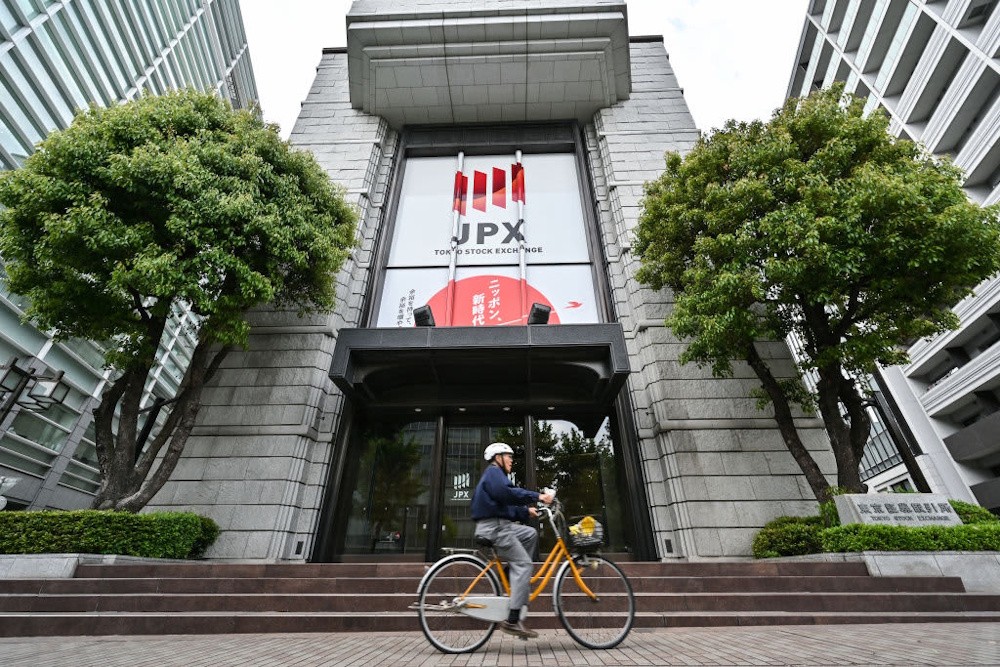
Japan’s Nikkei 225 rose by 1.38%, finishing at a historic peak of 60,537.36. Meanwhile, South Korea’s Kospi experienced a notable increase of 2.15%, concluding the trading day at 6,615.03, thereby achieving a new peak. In Australia, the S&P/ASX 200 recorded a decrease of 0.23%, concluding at 8,766.4. The Hong Kong Hang Seng index saw a decrease of 0.24% in its last trading hour, while the mainland China’s CSI 300 exhibited relative stability, concluding at 4,770.95. This stability is underpinned by a significant rise in China’s industrial profits, which experienced a year-on-year increase of 15.8% in March, reflecting an acceleration from the 15.2% growth recorded in the first two months of the year.
Sentiment exhibited resilience despite the announcement by U.S. President Donald Trump on Saturday regarding the cancellation of plans to send U.S. envoy Steve Witkoff and Jared Kushner to Islamabad, Pakistan for discussions with Iran. “An inordinate amount of time is being devoted to travel, alongside a burdensome workload!” Furthermore, Trump remarked in a post on Truth Social that there is considerable discord and ambiguity within their ‘leadership.’ Oil prices experienced a notable increase of around 2% in the wake of the failed attempts to initiate a second round of peace negotiations between the United States and Iran. International benchmark Brent oil futures recorded an increase of more than 2%, reaching $107.49 per barrel by 7:35 p.m., while U.S. crude oil rose by 1.79%, settling at $96.19. Tensions in the Strait of Hormuz continue to escalate, with reports confirming that Iran’s Revolutionary Guard has taken control of two cargo vessels near this vital maritime corridor.
U.S. futures exhibited a modest downturn, with Dow Jones Industrial Average futures decreasing by 0.2%, which translates to a reduction of 130 points. S&P 500 futures fell by 0.3%, while Nasdaq 100 futures similarly saw a decline of 0.3%. Last Friday in the U.S., the S&P 500 and Nasdaq Composite reached unprecedented closing levels. The broad market index concluded the session with an increase of 0.8%, reaching 7,165.08, while the technology-focused Nasdaq experienced a rise of 1.63%, closing at 24,836.60. Both indexes reached unprecedented intraday peaks. Nonetheless, the Dow Jones Industrial Average experienced a decline of 79.61 points, which corresponds to a reduction of 0.16%, finishing at 49,230.71.
