
Asia-Pacific markets exhibited a predominantly positive trend on Monday, as investors maintained a vigilant stance regarding developments in the Middle East, particularly in light of escalating tensions between Iran and the U.S. On Sunday, Donald Trump stated that a U.S. Navy guided missile destroyer had engaged and incapacitated an Iranian-flagged cargo ship in the Gulf of Oman, prior to Marines boarding and taking control of the vessel. The seizure represents a significant intensification of the blockade, occurring in the wake of Iran’s earlier engagement with commercial vessels attempting to navigate the Strait of Hormuz on Sunday. The strait lies between the Persian Gulf and the Gulf of Oman. Since last week, the United States has implemented a naval blockade affecting vessels entering and departing from Iranian ports. Iran perceives the current blockade as a violation of the ceasefire established between the U.S. and Iran, and references this as a key reason for its decision to cancel the anticipated negotiations on Monday in Islamabad.
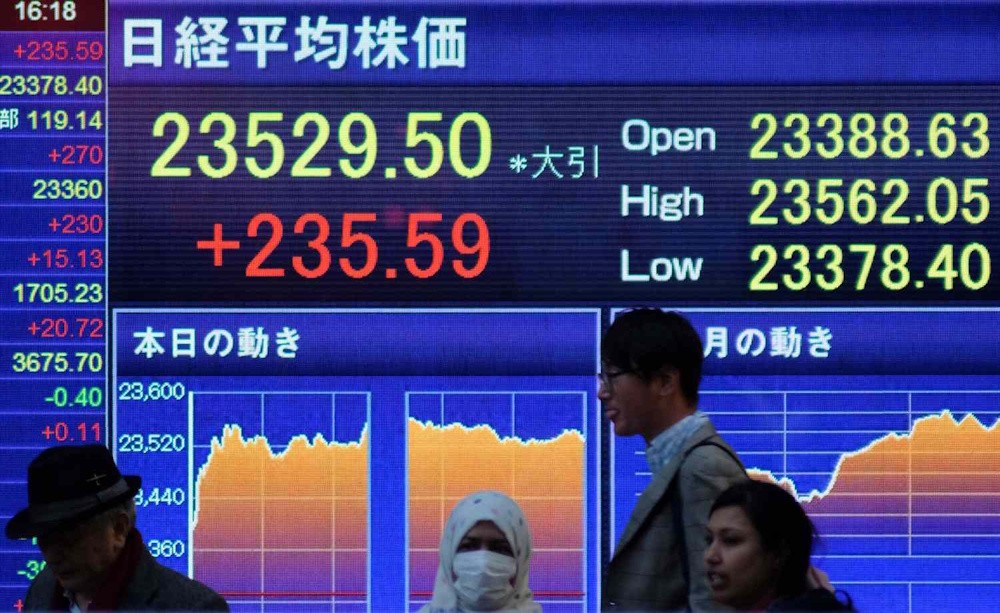
On Sunday, Trump issued a stark warning, stating he would “knock out every single Power Plant, and every single Bridge, in Iran” should Tehran fail to comply with Washington’s terms to resolve the ongoing conflict. West Texas Intermediate futures increased by 6.49%, reaching $89.29 per barrel as of 3:35 am. Brent crude experienced an increase of 6.34%, reaching a price of $96.12 per barrel. South Korea’s Kospi reduced its earlier gains, concluding Monday’s session with an increase of 0.44%, while the small-cap Kosdaq rose by 0.41%. SK Hynix emerged as one of the top performers on the Kospi Index, experiencing an increase of more than 3% after the announcement of its commencement of mass production of next-generation AI server memory tailored for Nvidia’s Vera Rubin platform. Japan’s Nikkei 225 experienced an increase of 0.60%, reaching 58,824.89, whereas the Topix saw a rise of 0.43%, settling at 3,777.02. Australia’s S&P/ASX 200 exhibited minimal variation, settling at 8,953.30.
Mainland China’s CSI 300 index increased by 0.61% to reach 4,757.44, whereas Hong Kong’s Hang Seng index rose by 0.77% to 26,361.07. China maintained its benchmark lending rates for the 11th consecutive month, amid rising energy prices driven by escalating tensions in the Middle East, which have adversely impacted the growth outlook. The decision followed the growth of the world’s second-largest economy, which expanded by 5% in the first quarter, an increase from 4.5% in the previous quarter, and positioned at the upper limit of its full-year target range. Beijing has adjusted its growth target for 2026 to a range of 4.5% to 5%, marking the least ambitious objective recorded since the 1990s.
India’s Nifty 50 and the BSE Sensex exhibited slight upward movement in trading. Futures for the Dow Jones Industrial Average declined by 425 points, representing a decrease of 0.9%. S&P 500 futures declined by 0.8%, whereas Nasdaq-100 futures decreased by 0.65%. During Friday’s regular session, the S&P 500 experienced an increase of 1.2%, closing at 7,126.06 and surpassing the 7,100 mark for the first time. The Nasdaq Composite increased by 1.52%, concluding at 24,468.48, marking its 13th consecutive day of gains and the longest winning streak since 1992. Both indexes achieved new intraday and closing highs.
