
Asia-Pacific markets exhibited a mixed performance on Tuesday, as investors appeared to dismiss new uncertainties surrounding the tenuous U.S.-Iran ceasefire, following President Donald Trump’s assertion that the truce was on “massive life support.” On Monday, Trump expressed skepticism regarding the longevity of the U.S.-Iran ceasefire, characterizing the tenuous agreement as being effectively “on life support” following Tehran’s response, which he deemed unacceptable in relation to Washington’s proposal aimed at resolving the conflict. “I would characterize the ceasefire as being on significant life support, akin to a scenario where the physician enters and states, ‘Sir, your loved one has roughly a 1% probability of survival,’” he remarked.
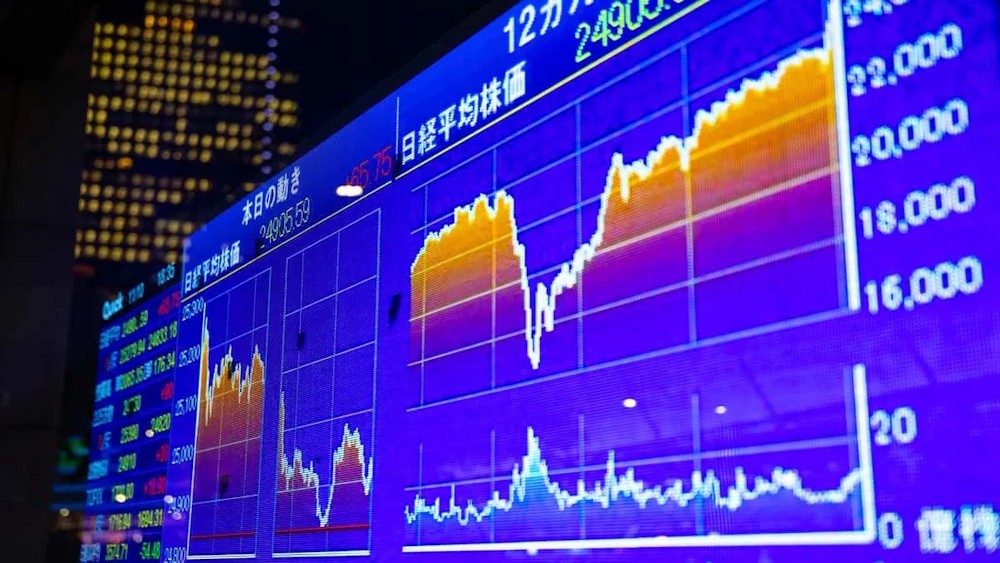
Japan’s Nikkei 225 increased by 0.52% to 62,742.57, whereas the Topix advanced by 0.83% to 3,872.90. South Korea’s Kospi reduced its initial losses, ultimately declining by 2.29% to close at 7,643.15, following the achievement of a new record high on Monday. The small-cap Kosdaq experienced a decline of 2.32%, closing at 1,179.29. In Australia, the S&P/ASX 200 experienced a decline of 0.36%, closing at 8,670.70. Yields on Japan’s 10-year government bond reached their peak since 1997, climbing to 2.545% following the release of minutes from the Bank of Japan, which indicated that certain board members advocated for a forthcoming increase in rates. The Hong Kong Hang Seng index experienced volatile trading, declining by 0.16% in the final hour of afternoon trading, while the CSI 300 saw a slight decrease of 0.08%, settling at 4948.05. India’s Nifty 50 experienced a decline of 1.27%.
In the face of escalating geopolitical tensions, rising oil prices, and persistent inflation worries, global equities have maintained an upward trajectory. This trend highlights what GammaRoad Capital Partners’ CIO Jordan Rizzuto characterizes as a “show me” market, where investors exhibit a growing reluctance to respond to risks unless they significantly impact economic or corporate fundamentals. Following the challenges posed by the pandemic, escalating inflation, stringent rate increases, and concerns over tariffs in recent years, investors have adapted to the strategy of purchasing during market downturns instead of withdrawing, he noted in a communication on Tuesday. Rizzuto noted that structural factors are further bolstering the rally, such as retail flows into leveraged exchange-traded funds and call options. This has led dealers to acquire underlying equities as hedges, resulting in the swift growth of buffer funds and hedged equity strategies that offer enhanced downside protection.
In the U.S., S&P 500 futures exhibited a slight increase, while Nasdaq 100 futures recorded a gain of 0.1%. Futures associated with the Dow Jones Industrial Average increased by 24 points, representing a change of less than 0.1%. Overnight in the U.S., the S&P 500 experienced an uptick, supported by significant gains in technology stocks, despite an increase in oil prices following Trump’s dismissal of Iran’s recent proposal to resolve the conflict. The broad market index increased by 0.19%, concluding at 7,412.84, whereas the Nasdaq Composite rose by 0.1%, finishing at 26,274.13. Both indexes achieved new all-time intraday highs during the session, concluding at record levels. The Dow Jones Industrial Average increased by 95.31 points, representing a rise of 0.19%, reaching a level of 49,704.47.
