
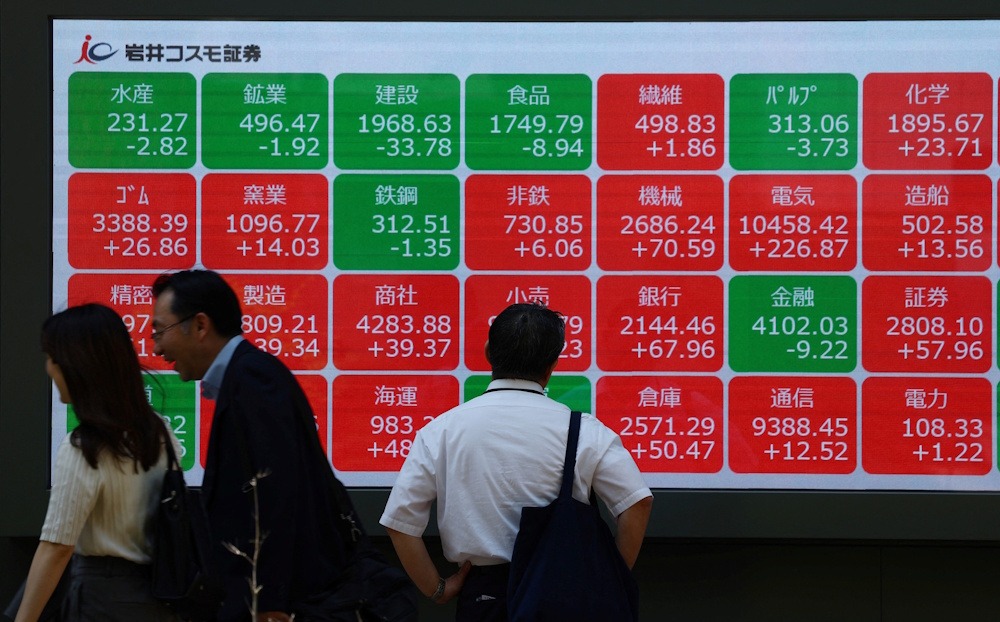
Japanese share indexes concluded Wednesday’s trading session in negative territory, as the intensification of the Middle East crisis overshadowed a resurgence of interest in AI-related firms. The benchmark index was up for most of the day, rising as much as 0.8%, before losing steam and ending 0.19% lower at 65,142.78. The broader Topix experienced a decline of 0.09%, settling at 4,046.64. Iran announced the launch of ballistic missiles targeting a base in Jordan utilised by U.S. military forces and reported assaults on 10 vessels on Wednesday, following the U.S. declaration of having destroyed five Iranian oil tankers.
News overnight indicated that Verizon has entered into a multi-billion-dollar agreement with Corning for the provision of high-density optical fibre aimed at enhancing AI infrastructure. This development has positively impacted Japanese cable manufacturers, including Fujikura, according to Maki Sawada, an equities strategist at Nomura Securities. “With the situation in the Middle East deteriorating, crude oil prices are rising and concerns over accelerating inflation appear to be weighing on Japanese shares,” Sawada said. “On the other hand, semiconductor and AI-related shares are performing strongly.”
Business confidence among major Japanese manufacturers increased in September, reaching its highest point since December 2021, supported by strong demand in the semiconductor and data center sectors, according to a monthly poll released on Wednesday. Breadth was nearly even, with 113 advancers on the Nikkei 225 against 110 decliners and two unchanged. The largest losers were Kyowa Kirin, down 5.88%, followed by DeNA, 4.65% lower, and Sumitomo Pharma, which lost 4.33%. The largest percentage gainers in the index were Furukawa Electric, which increased by 12.63%, followed by Tokai Carbon, rising by 9.27% to achieve its highest close since October 2018, and Fujikura, which saw a gain of 8.07%.
